ACL Tear: Immediate Repair or Wait?
You ruptured your ACL. You are athletic and need a stable knee. Do you get it fixed fast or wait?

This topic has been widely debated, and there are no clear answers. Unfortunately, 50% of people who rupture their ACL develop knee arthritis within 10 years—whether or not they have it repaired. This outcome is devastating, and we must do better. Here are some of the hot topics related to the timing of the surgery and prevention of arthritis.
Prior human and animal surgery data had suggested that early surgical intervention led to more scar tissue, loss of motion, and stiff knees. Yet later studies found no difference in the outcomes in relation to the timing of surgery. More recent studies have demonstrated that delays in stabilizing the knee increase the degree of arthritis, arguing for faster intervention. So, which is it?
Early surgery, immediately after injury, has the benefits of washing out the knee of inflammatory molecules released at the time of trauma1,2. There is evidence that the blood in the joint can promote arthritis3,4,5. Hemophiliacs learned this years ago, as frequent bleeding led to a unique hemophiliac joint arthritis.
Yet the blood brings the stem cells required for healing, so washing it away should diminish the healing response. In fact, when we repair meniscus cartilage and articular cartilage with our paste graft technique, we purposely release marrow blood with its healing progenitor cells into the joint. Bone marrow aspiration and PRP are all methods augmenting healing with blood-based factors.
Early surgery diminishes the time of muscle inhibition and of early scar formation6. Early surgery provides stabilization so that the athlete does not do further damage, most commonly by tearing the meniscus. And early surgery permits repair of the other damaged tissues in the joint before they suffer additional injury.
Delaying surgery, on the other hand, permits patients to organize their lives, line up physical therapy, and assemble their support team. Delayed surgery allows immediate rehabilitation steps to reduce the initial inflammation, such as ice compression, soft tissue massage, elevation, and focused exercises to regain full motion. Delaying surgery permits the patient to more carefully choose their surgeon, select the type of tissue for the ACL reconstruction, and assess the philosophy of their care team. It also permits both the patient and doctor to determine whether surgical repair is actually needed, or if the patient might do just as well with a rehabilitation program augmented by anabolic injections to accelerate the healing process.
Which raises the question: In this new era of injecting injured joints with lubricants, growth factors, exosomes, marrow and fat cells, PRP, and birth tissues, will the timing of surgery even matter?
The facts are that humans come with a wide range of presentations when they injure their ACLs, which makes the animal surgery data on early or late ACL surgery difficult to extrapolate. While an artificial intelligence (AI) analysis of the data, or a surgeon’s bias (such as “I always do it this way”), may lead to a good outcome, it is judgment—yours and that of an experienced orthopaedic surgeon acting as your protective physician—that will most likely help you get the result you expect.
That said, I know we can do better. It is crucial to push forward the science and the outcome studies to be able to advise you, the patient, what the surgeon would do for themselves were they in your situation.
References
- Retzky JS et al. Early anterior cruciate ligament reconstruction mitigates the development of posttraumatic osteoarthritis in a murine anterior cruciate ligament rupture model. The American Journal of Sports Medicine. 2026;54(1):17–26. doi:10.1177/03635465251390541
- Bertolini DR, Nedwin GE, Bringman TS, Smith DD & Mundy GR. Stimulation of bone resorption and inhibition of bone formation in vitro by human tumour necrosis factors. Nature. 1986;319(6053):516–518. doi:10.1038/319516a0
- Gualtierotti R, Solimeno LP & Peyvandi F. Hemophilic arthropathy: Current knowledge and future perspectives. J Thromb Haemost. 2021;19(9):2112–2121. doi:10.1111/jth.15444
- Hooiveld M, Roosendaal G, Wenting M, van den Berg M, Bijlsma J & Lafeber F. Short-term exposure of cartilage to blood results in chondrocyte apoptosis. Am J Pathol. 2003;162(3):943–951. doi:10.1016/S0002-9440(10)63889-8
- van Vulpen LF et al. Biochemical markers of joint tissue damage increase shortly after a joint bleed; an explorative human and canine in vivo study. Osteoarthritis Cartilage. 2015;23(1):63–69. doi:10.1016/j.joca.2014.09.008
- Lara PHS et al. Functional, radiological, and scapular motion evaluation of surgical versus non surgical treatment of type 3 acromioclavicular dislocations. The American Journal of Sports Medicine. 2026;54(1):118–127. doi:10.1177/03635465251395220
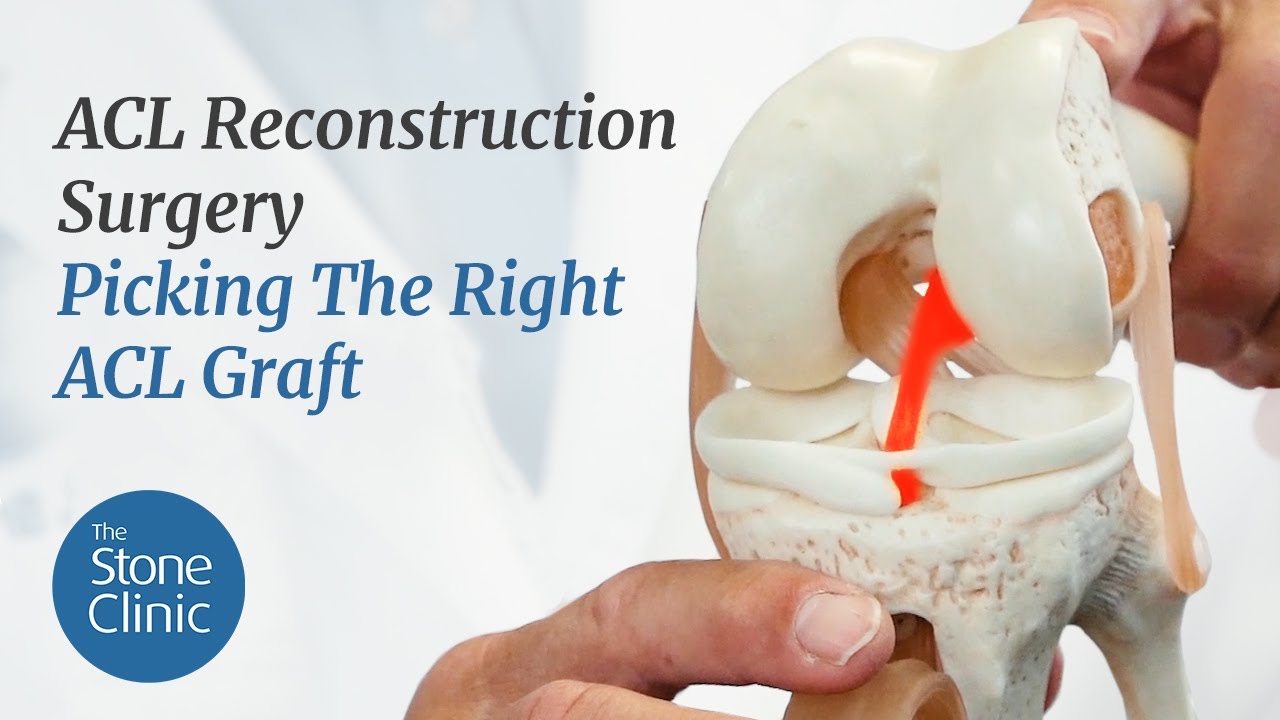
ACL Reconstruction Surgery Explained & Picking The Right ACL Graft
Dr. Stone shares the innovations in ACL reconstruction that lead to more successful patient outcomes and a stronger return to sports.