The Sorry State of Ski Bindings
Alpine ski bindings have not meaningfully improved in decades, and ACL injuries keep rising. Why?
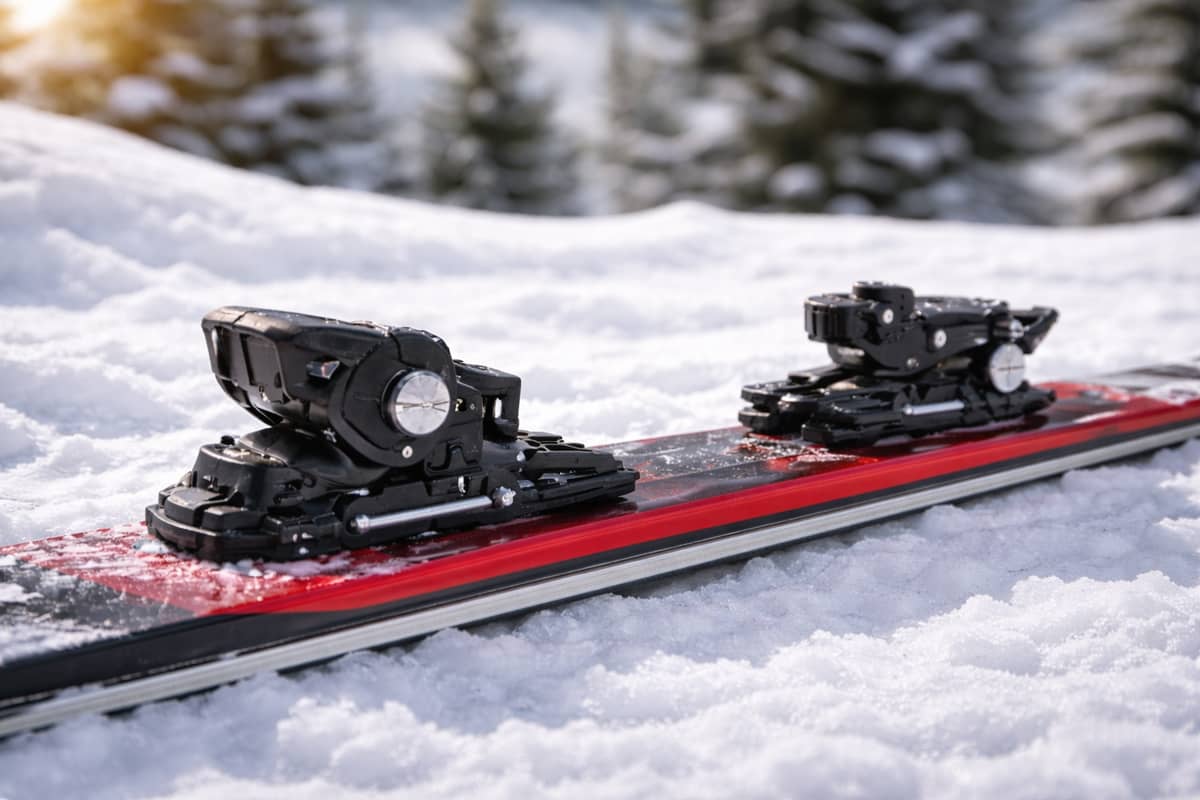
No one would ski if they really knew how dangerous it is. Skiing is just so much fun that even those of us who really do see all the injuries and have suffered them ourselves, still ski every chance we get.
The problem is that when you clamp a long lever arm (ski) onto a foot, the forces generated in a fall or twisting movement are greater than the ability of the ligaments and bones to resist. If you set the bindings too loosely, the ski comes off (pre-release) when you don’t want it to. Too tight, and the ligaments tear or the bones break.
To solve these issues, bindings that release at defined forces were invented. Tables were constructed to estimate how much those forces would be for any given skier’s height, weight, and skill level (DIN Settings). Needless to say, the possibilities with so many variables—never mind ever-changing snow conditions—are so great that the estimated binding settings are wildly wrong far too often. Added to that is the reality that skiers don’t maintain their bindings assuming that, once adjusted, they are good to go—for years. They often forget that the mechanical components of ski bindings, exposed on the roofs of cars with road dirt and grime blown into their parts, degrade the mechanism and ruin the slick bases (Spoiler alert: Never put skis on a roof without a ski bag covering them).
The fundamental problem is that when you clamp in the toe and the heel, the differential forces on each part are always in conflict. Squeezing the toe into the heel requires both the toe and heel components to release upwards, sideways, and at various angles. The toes of current bindings do this pretty well. The heel mechanisms currently don’t release laterally. The most common mechanism of injury is called the “abduction-moment,” which refers to the valgus (abduction) force that pushes the lower leg sideways at the knee joint. This is a primary cause of non-contact anterior cruciate ligament (ACL) injuries in skiing.
This often happens during "slip-catch" events, where a ski edge suddenly catches during a turn, transferring force and rotational momentum up to the boot and knee. The introduction of shaped (carving) skis has made this type of loading more prevalent.
Conventional alpine ski bindings are primarily designed to release under direct fracture-risk loading (e.g., twisting forces that cause tibia fractures). They often fail to release quickly enough (or at all) in response to the specific combination of the valgus force and rotation. This leaves the ACL the "weak link," which tears before the binding can release.
Other unexpected ski equipment features, such as wider skis and lifters, which raise the height of the boot off the ski, also contribute to ligament injuries. The wider the ski, the more loading must occur to get the ski tilted onto its edge. And the higher the boot sole off the snow, the longer the lever arm between ski and knee.
Over the last few decades, no US ski binding company met the international ISO safety standards, and 22 of them went out of business. Only five remain, all European. The solutions for safer bindings are either very low-release lateral release designs (which have been tested but are not yet available) or eliminating the toe and heel altogether. A magnetic connection between the flat ski boot sole and an embedded plate in the ski, with software reading all the variables, is the optimal solution…but has remained on my drawing board for years. (The first prototype designs were too heavy.) Dirt, ice, snow, the added weight of batteries, and sludgy software have kept it from becoming reality. But given advancements in battery technology, software, and AI, the possibility of this solution could soon be revived.
I worry, however, that your personal AI will tell you not to ski…
For more on how skiers can play for a lifetime and avoid knee pain after skiing, be sure to check out all Dr. Stone's blogs on skiing injury prevention and recovery.
