Meniscus Transplant Center
For over 30 years, he and his team have specialized in giving people back their vital meniscus shock absorbers, keeping the knee moving naturally and reducing the likelihood of a total knee replacement.
-

Live in the San Francisco Bay Area?
Book In-Person Visit Or Call Us at 415-563-3110 -

Outside of the Bay Area?

Meniscus Transplant Center
Meniscus transplant is a highly skilled procedure involving accurate diagnosis, acquisition of the perfect donor tissue, complex surgery, and specialized rehabilitation. The Meniscus Transplant Center in San Francisco, CA is one of the few places in the world dedicated to this procedure.
In the past, if a meniscus was damaged beyond repair, it was simply removed. Nothing replaced it. Now we know better. Replacing a meniscus with donor tissue can delay or prevent the need for a knee replacement and possibly even prevent the onset of osteoarthritis. Long-term data confirms that a meniscus transplant relieves pain, improves function, and returns people to sports, even if they already have arthritis.
Meniscus Transplant Center services:
- Tissue acquisition: In-house inventory of the best meniscus tissue, including backup tissue, to eliminate delays in providing care.
- World-class surgical facilities: We partner with state-of-the-art ambulatory surgical centers and hospitals in San Francisco, where Dr. Stone’s team has performed over 4000 knee cases.
- On-site physical therapy: Highly specialized, dedicated protocols for the evaluation and rehabilitation of meniscus injuries to help ensure optimal outcomes.
- Measured outcomes: Careful evaluation of decades of meniscus transplantation data from The Stone Clinic and around the world.
What is a Meniscus?
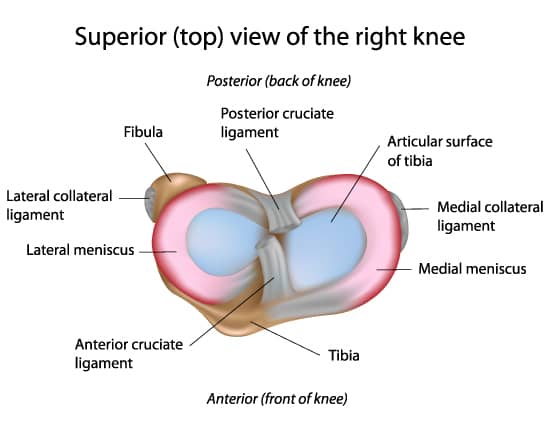
Meniscus cartilage is vital to the healthy functioning of the knee joint. It provides cushioning between the thighbone (femur) and shinbone (tibia) and helps with shock absorption, stabilization, lubrication, and load distribution within the knee.
Why Replace the Meniscus?
Without the knee’s main shock absorber, the femur and tibia begin to rub together, damaging the protective layer of articular cartilage around the bones and causing osteoarthritis. By replacing the meniscus with donor cartilage, the patient can regain the natural “shock absorber” in the knee and experience many additional years of activity, even in the presence of arthritis.
Meniscus Transplants are Possible Even with Arthritis
If you already have arthritis, a meniscus transplant can be combined with an additional procedure (articular cartilage paste graft) to regenerate cartilage and rebuild the knee. Damaged ligaments may also be repaired or replaced. The combination of procedures is called a BioKnee® replacement.
Many of our meniscus transplant patients had moderate to severe arthritis and were told that they needed a total knee replacement. They didn’t. A BioKnee® replacement was enough to get them back to their sports.

Enter your email to receive your guide
About Meniscus Transplant Surgery
Meniscus transplantation is a surgical procedure to replace damaged or missing cartilage in the knee. During the surgery:
- The surgeon first removes the torn pieces of your original meniscus.
- A donor meniscus is then placed into your knee and carefully secured so it can handle normal knee forces and motion.
- Before finishing, the surgeon checks that the new meniscus is positioned correctly and works well with the surrounding knee structures.
At The Stone Clinic, we use a specialized three-tunnel technique that Dr. Stone, with the Stone Research Foundation, developed in the 1990s. This method helps the new meniscus fit and function as closely as possible to your original cartilage.
-
Live in the San Francisco Bay Area?
Book In-Person Visit Or Call Us at 415-563-3110 -
Outside of the Bay Area?

Our Meniscus Transplant Patient Stories
Meniscus transplant patients are competing in IronMan triathlons, skiing a hundred days a year, surfing, hiking, biking, and so much more. Hear directly from meniscus replacement patients about their recoveries, treatment experiences, and the sporting activities they are enjoying today.
-
Live in the San Francisco Bay Area?
Book In-Person Visit Or Call Us at 415-563-3110 -
Outside of the Bay Area?

Complimentary Virtual/ Phone Consultation
Patients from across the United States and around the world travel to the Meniscus Transplant Center at The Stone Clinic in San Francisco to have their knees biologically replaced by Dr. Stone. For those patients who do not live in the Bay Area, we offer a complimentary virtual consultation service.
To find out if a meniscus transplant is right for you, you may schedule a complimentary consultation in which Dr. Stone will personally review your injury via a Zoom video conference meeting or a phone call.
Expert Guidance from StoneFit Physical Therapy Team
Our skilled, onsite physical therapists are specially trained in rehabilitation techniques for meniscus transplantation and our BioKnee surgical repairs to help our patients get back to an active lifestyle as quickly as possible.
See how our team guides patients through each stage of healing, strength-building, and return-to-sport progression: meniscus transplant rehabilitation protocol.
Frequently Asked Questions About Meniscus Transplantation
A meniscus transplant may be appropriate for someone who has lost a significant portion of meniscus cartilage through injury or prior surgery and now has pain in that compartment of the knee. It is often considered for active patients who are too young for an artificial knee replacement, want to preserve their natural knee, or want to continue higher-level activities and sports.
Physically, good candidates usually have pain isolated primarily to the side of the knee where the meniscus is missing, enough remaining joint space to rebuild the knee, and damage not too widespread throughout the joint. The knee should also have reasonably good range of motion, stable or repairable ligaments, and alignment that is not severely bowed inward or outward.
Stone Research Foundation data also supports expanded candidacy beyond the traditional young-patient profile. In patients ages 50 to 70 with arthritis, research showed that meniscus transplantation combined with biologic knee restoration delayed artificial joint replacement by an average of 8.8 years and helped 41% of patients avoid it completely for up to 25 years.
Missing meniscus tissue can increase the forces across the knee and raise the risk of arthritis over time, so replacing it can be a crucial intervention when there is no simple repair option available. Candidacy is ultimately determined through the patient’s injury history, symptoms, activity goals, physical exam, commitment to rehabilitation, and recent MRI and X-ray review.
Read the Stone Research Foundation study on expanded meniscus transplant candidacy
Many meniscus transplant patients return to sports once the tissue has healed and rehabilitation is complete. The goal is to reduce pain, restore the knee’s shock absorber, and help active people keep moving naturally. Outcomes may vary, but The Stone Clinic’s approach is built around helping patients return to lifelong activity whenever possible.
Yes. The meniscus is the knee’s shock absorber and force distributor. When too much meniscus is removed, pressure increases on the cartilage surfaces, which can lead to pain and arthritis over time. A meniscus transplant is designed to restore more normal knee mechanics and help protect the joint.
In many cases, yes. If arthritis is present, Dr. Stone may combine a meniscus transplant with articular cartilage repair, such as an articular cartilage paste graft, as part of the BioKnee® program. This approach is designed to biologically rebuild the damaged parts of the knee and help delay or avoid artificial joint replacement when appropriate.
Recovery depends on the condition of the knee and whether other procedures, such as cartilage repair or ligament reconstruction, are performed at the same time. Rehabilitation is essential because the new meniscus must heal while strength, motion, gait, and mechanics are restored. Our StoneFit team specializes in guiding recovery and return-to-sport programs using our dedicated rehabilitation protocols.
No. Meniscus transplantation has been studied for decades and is used to replace missing meniscus tissue in appropriately selected patients. The Stone Research Foundation has published long-term clinical research studies showing significant improvements in pain and function, with many patients returning to sports even when cartilage damage was present.
Donor meniscus tissue is carefully screened, processed, and matched before surgery. Because the meniscus is cartilage tissue with a limited blood supply, rejection is not expected in the same way it can be with an organ transplant, and patients typically do not need anti-rejection medication. The goal is to use safe, high-quality donor tissue to replace the missing shock absorber and reduce pain in the affected part of the knee.
Insurance coverage varies by plan, diagnosis, and medical policy. While meniscus transplantation is a well-studied procedure with decades of clinical use, some insurers may still classify coverage differently from standard meniscus procedures. Lack of universal coverage does not mean the procedure is experimental; it often reflects differences in insurance policy, not the medical value of restoring the knee’s missing shock absorber.
Read the Stone Research Foundation study on meniscus transplantation in athletes
Stone Research has conducted decades worth of research establishing the efficacy and optimizing the techniques for meniscus transplantation.
You may explore the published meniscus research here.
Meniscus transplantation in an active population with moderate to severe cartilage damage Stone, KR, Pelsis, JR, Surrette, ST, Walgenbach, AW, & Turek, TJ (2014). Knee Surg Sports Traumatol Arthrosc. https://pubmed.ncbi.nlm.nih.gov/25253235/
A long-term study of 49 meniscus transplant patients found that athletes who replace their damaged or missing meniscus with donor tissue can recover well enough to get back to sports, for up to 15 years, even if they had already developed osteoarthritis.
Meniscal allografting: The three-tunnel technique Stone K.R., A.W. Walgenbach. 2003 "Meniscal allografting: the three-tunnel technique." Arthroscopy19 (4): 426-30. https://pubmed.ncbi.nlm.nih.gov/12671626/
This technical note describes an improved arthroscopic technique of meniscal transplantation that simplifies the surgical procedure and secures the allograft to the tibia at three sites. The technique is useful for both medial and lateral meniscal transplantation and has been used in our Clinic for hundreds of meniscal transplantation procedures.
Meniscal Sizing Based on Gender, Height, and Weight. Stone KR, Freyer A, Turek T, Walgenbach AW. Arthroscopy: The Journal of Arthroscopic and Related Surgery. May 2007:23(5):503-8. https://pubmed.ncbi.nlm.nih.gov/17478281/
Successful meniscus transplantation may depend on accurate sizing. In our meniscus transplantations, we have observed that when the height and weight of the recipient matched those of the donor, the meniscal size appeared to be a match at surgical implantation. We designed this study to confirm this observation.
Further Research Details Available Here

Dr. Stone is one of the world’s leading experts in meniscus transplantation and a pioneer of biologic orthopaedic techniques. For over 30 years, he and his team have specialized in giving people back their vital meniscus shock absorbers. The Meniscus Transplant Center at The Stone Clinic is an international destination for meniscus transplantation, dedicated to the diagnosis, surgical implantation, and rehabilitation of people in need of meniscus tissue. Dr. Stone is consistently recognized as the country’s top 75 knee surgeons1.
He is a physician for Smuin Ballet and has served as a physician for the U.S. Ski Team, the U.S. Pro Ski Tour, Lawrence Pech Dance Company, Marin Ballet, and the United States Olympic Training Center. He has been a TED Talk keynote speaker and featured in the New York Times, Wall Street Journal, Good Morning America, Forbes, Triathlete Magazine, SKI Magazine, the Ologies podcast, and the Star Talk podcast with Neal deGrasse Tyson. He is also the best-selling author of the book Play Forever.
-
Live in the San Francisco Bay Area?
-
Outside of the Bay Area?