ACL Reconstruction In Older Athletes
Controversies about aging athletes and ACL injuries are never-ending. Here are some of my biases.

Every athlete needs a stable knee. Yet not all instabilities interfere with sports or lead to arthritis. What we see in athletes who are more mature in their careers is that they either choose to have stabilization surgery or they change their activities. Let’s look at some examples.
The most recent notable skier who underwent another ACL surgery is Lindsey Vonn. One of the greatest ski racers ever, she knows that when she pushes the limits of speed and control on an icy racecourse, a stable knee performs better than an unstable one. In her case, an unstable knee can be life-threatening. Since she wants to continue to perform at a high level, whether or not she races, ACL reconstruction is the safest choice.
Other older athletes in their fifties and sixties choose to stabilize their knees only if they notice the knee giving way in their sports. The act of giving way, when the femur moves abnormally on the tibia, has a high incidence of tearing the meniscus cartilages, worsening symptoms of arthritis, pain, and swelling.
People coming to partial knee replacement sometimes have torn ACLs. I used to reconstruct the ACL in combination with their robotically controlled partial knee replacement. However, we have learned how to adjust the implants to help stabilize the knee without the ACL, and since there is no increased wear on the replaced compartment, we usually leave out the ACL reconstruction now.
The choice of tissues is always young donor allograft tissues in my hands. No reason to rob one part of the knee to rebuild another, especially when the tissue available from the bank is young, and the older patient is not. I almost always add an extra articular reconstruction to the ACL surgery by carrying the one long quad tendon allograft through the knee and down the lateral side. This has lowered the re-tear rate and increased the stability of the reconstructions.
Older patients, just like younger ones, benefit from injections of PRP, growth factors, and lubricating hyaluronic acid. The cocktail reduces inflammation, has an anabolic effect on the lining cells of the joint, induces more lubrication than hyaluronic acid alone, is anti-scarring, and recruits the body’s own progenitor cells from the native stem cells to direct the healing response. While older patients have fewer stem cells than younger ones, they still have billions of them, and my job is to recruit their progeny to the site of injury to accelerate healing. It should not take a year to recover from ACL surgery in the 21st century.
The key to a decision on whether or not to have surgery, which surgery to have, and which anabolic stimulation to use to either avoid surgery or to make it better is one that depends on both the latest knowledge and a careful physical exam. Some knees are simply more unstable than others. Some with torn anterior cruciate ligaments are not unstable at all. And some associated injuries, such as meniscus tears or articular cartilage damage, dramatically affect the decision to operate and the outcomes that are expected. My bias is to make the decision with the patient, with the exam, with the best MRI and X-ray imaging, and with the judgment, experience, and wisdom of an orthopaedic surgeon who wants to help the patient return fitter, faster, and stronger than they were before they were injured.
I believe that there are many who share my bias.
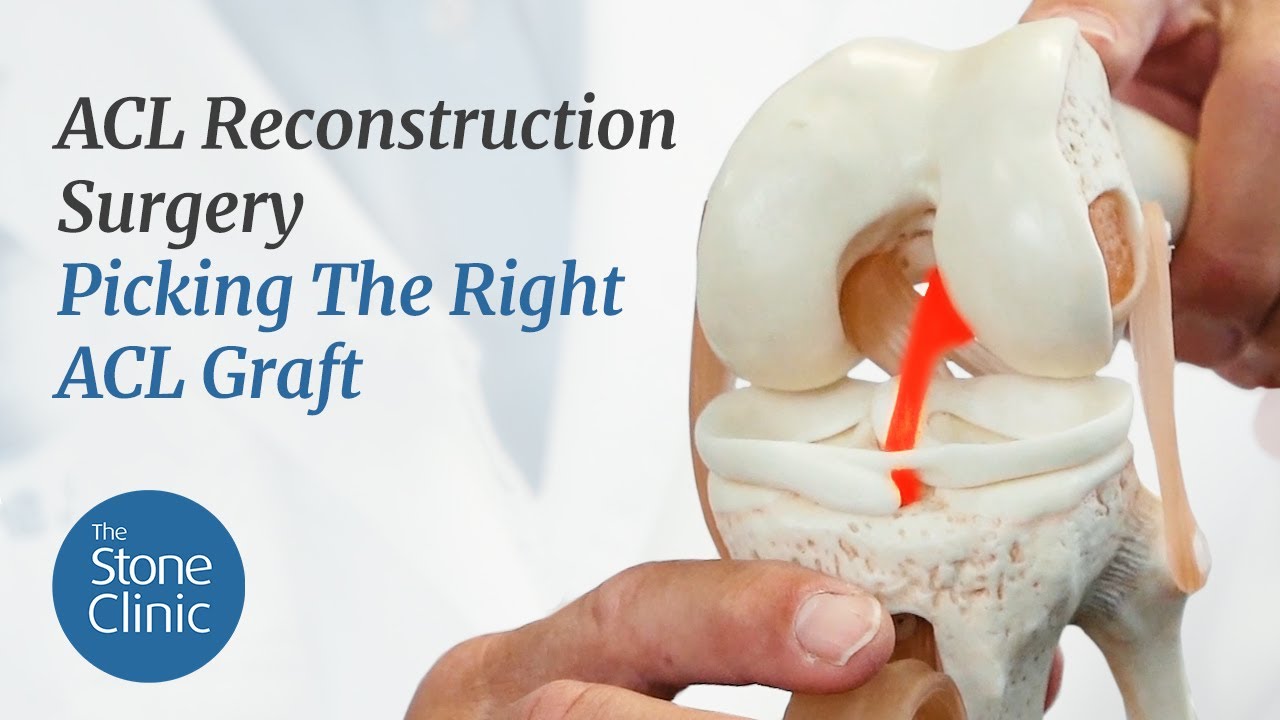
The Stone Approach to ACL Reconstruction Surgery
At The Stone Clinic, we can reconstruct the ACL using donor tissue. In this video, Dr. Stone shares the recent innovations in the procedure and why they now lead to more successful patient outcomes that return to the activities they love fitter, faster & stronger than before their surgery.