Know The Bias Of Your Surgeon - ACL
‘Tis the ski season… and ACLs will again be all the rage…unfortunately. No one would ski if they truly knew the risks—and the Anterior Cruciate Ligament is definitely at risk. How injuries to it are treated depends on the bias of your surgeon. Here is why.
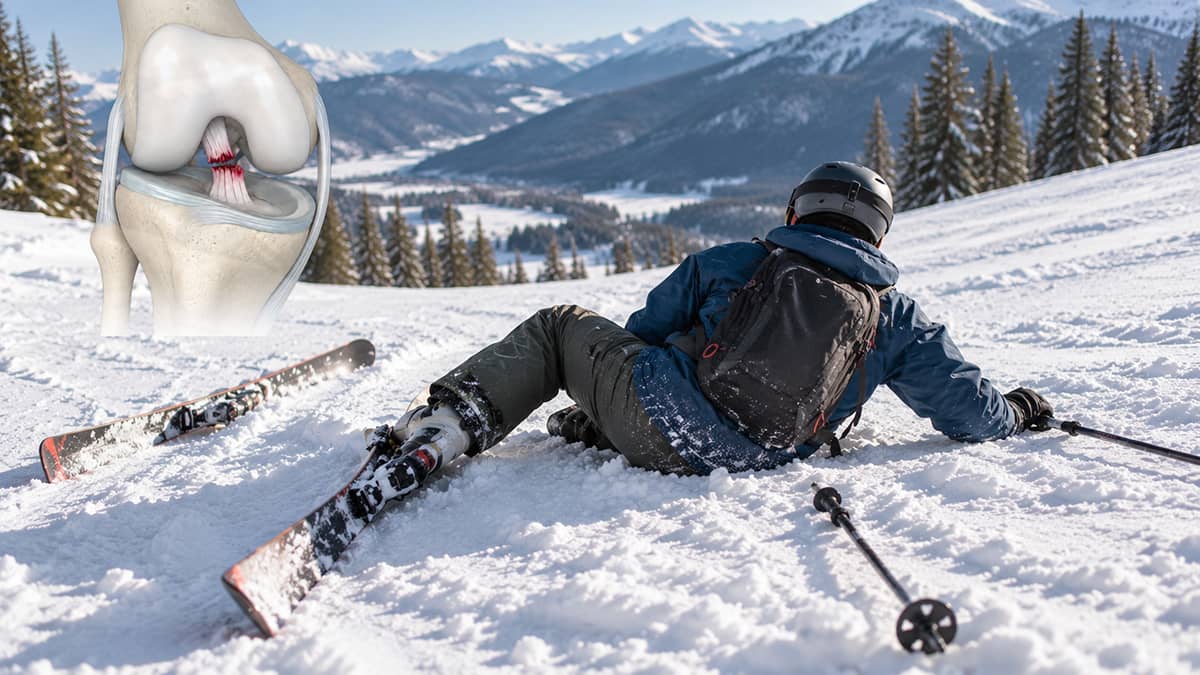
The ACL connects the femur to the tibia in the middle of the knee joint. When you attach a very long lever arm (i.e., a ski) to your foot, then travel down icy, bumpy mountains at speeds up to 60 miles per hour in variable weather conditions, what could possibly go wrong? Well, when you twist and fall, or lean backwards, or catch an edge, the foot—which is essentially locked into the ski despite what the binding companies wish you to believe—translates the forces to the knee joint, forcing the shin bone one way and the femur another. The ACL ruptures somewhere between 10-20,000 times per year from skiing accidents in the United States alone.
Ski-related ACL ruptures often occur from so much force that the fibers of the ACL rupture throughout the ligament (like a climbing rope that fails, and the inner core is no longer reliable). In patients who have ACL-dependent knees—where their knee is unstable and gives way without the ACL intact—the best option is to restore the ligament. This diminishes the chance of further damage to the meniscus and articular cartilage of the knee.
Which treatment options you are offered by your surgeon depend on the surgeon’s bias and experience, merged with your own anatomy and goals. While I won’t explore all the considerations, here are a few of my own strong biases.
In 2026, surgeons should not still be robbing tissue from one part of your body to rebuild another. “Harvesting” your hamstrings weakens your knee in flexion (critical for skiers, ballet dancers, and all athletes). Taking part of your patellar tendon to use as a substitute ACL weakens the tendon and may be associated with a higher incidence of arthritis in the center of your knee. Cutting out part of your quadriceps tendon weakens the quadriceps muscle, though this may be the least damaging of the tissue harvests.
My bias is to use young, healthy donor (allograft) quadriceps tendon grafts; our results have been the same as when we took the patellar tendon. Since there is a 3-20% re-rupture rate reported in the literature for ACL techniques, I believe it is better to just replace the injured graft with another donor graft, rather than continuously surgically damaging the knee. This is most controversial in young patients, as they have the highest natural re-rupture rate. Still, most surgeons in the US today continue to take tissue from one part of the knee to rebuild the injured part, even in young people.
An extra-articular graft, interchangeably named a “lateral extra articular tenodesis” (LET) or (LEAP), is helpful in all ACL injuries to reduce the re-rupture rate and address the rotational instability that often occurs from the initial injury. I use one long donor quadriceps graft passed through the knee, around the outside of the lateral collateral ligament, and fixed to the tibia.
Since most injuries are so forceful, ACL primary repairs (in which a torn ACL is reattached directly to its bone) are rare. However, when the ACL is torn just at the insertion point on the femur, it can be repaired. We now always add extra articular grafts to protect the repair.
Braces in the post-operative period are marginally helpful in some circumstances, but generally not needed except in primary ACL repair cases.
The earlier the surgery, the better, as unstable knees further damage the meniscus and stretch out the other ligaments supporting the knee—though if too much inflammation and pain are present, I sometimes wait for the knee to quiet down before surgery.
PRP, growth factors, and lubrication appear to be helpful for almost all of my surgical procedures. I augment the ACL healing tissues at one month after surgery. (The factors are already present during the bleeding at the time of surgery.)
ACL surgery is often only as good as the rehabilitation exercises that follow. I believe that the key to an outstanding recovery is post-op physical therapy, starting on day one—with an emphasis on manual therapy, swelling reduction, and immediate full range of motion. These strategies, combined with a total body fitness program, focus the patient on returning to their sport fitter, faster, and stronger than they were before their injury.
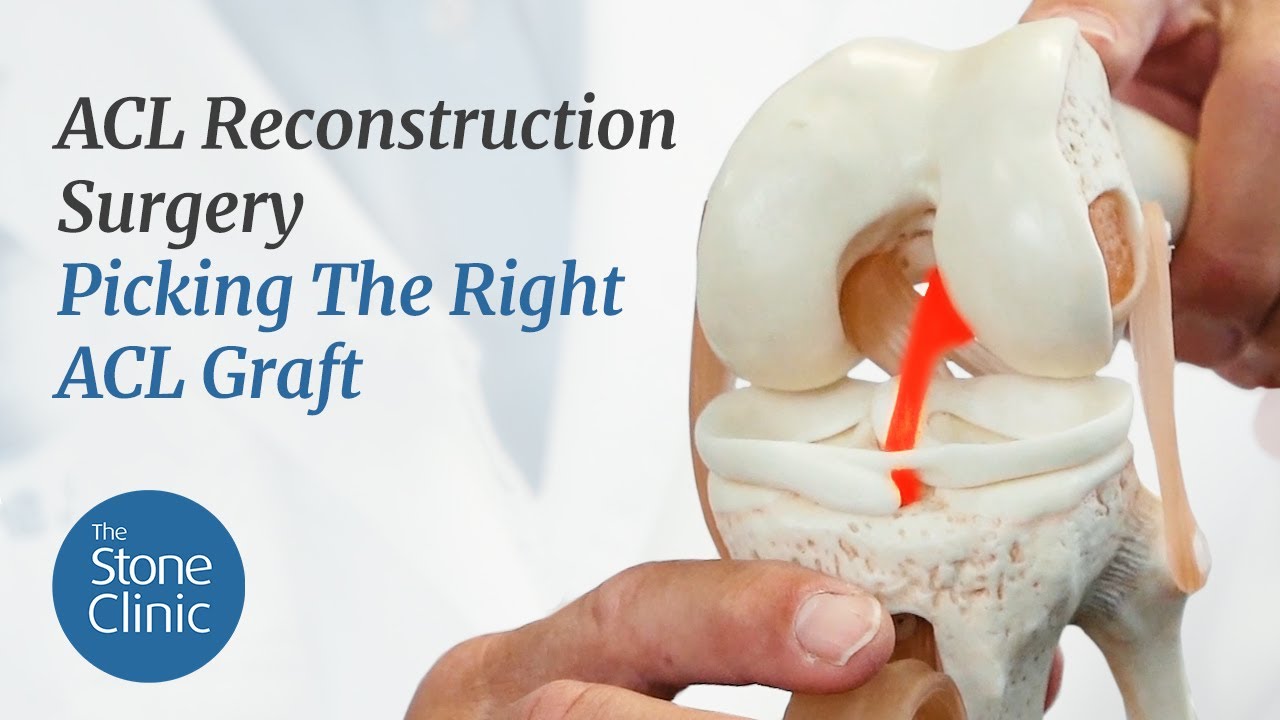
ACL Reconstruction Surgery Explained & Picking The Right ACL Graft
At The Stone Clinic, we can reconstruct the ACL using donor tissue. Dr. Stone shares innovations in the ACL repair and how they now lead to more successful patient outcomes that return to the activities they love fitter, faster & stronger than before their surgery.