Could a Robot Ski Race?
Ski racing, particularly in the speed events of downhill and super G, is incredibly dangerous. Is it exciting because we hold our breaths as humans take extraordinary risks, or is it mainly about velocity? If robots raced, would we watch?
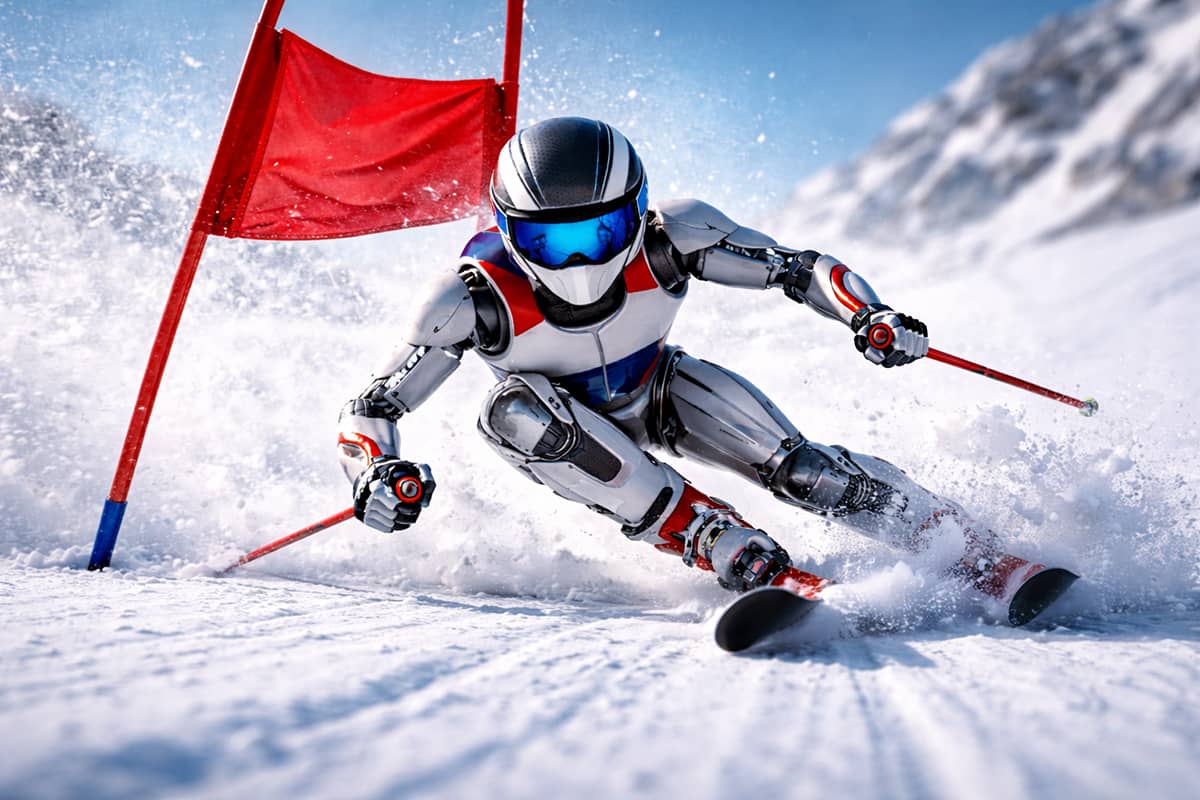
A robot on skis could rapidly calculate each decision, the angle of the body, knee, and ankle to obtain maximum carving ability of the ski. It could pick the optimal line to take down the course, adjusting for the lines the previous skiers took and noting ruts developed on the course. The effects of changing weather and snow conditions could lead to updating tactics, relayed to the robot’s teammates in real time.
The robot won’t be affected by previous injuries, torn ACLs, constraining knee braces, or—most of all—fear.
While this possible future fantasy may seem absurd to winter sports fans, we must recognize that the only winter Olympic sport that has led to life-threatening and career-ending injuries is ski racing. The courses are too steep, too icy, and too unpredictable for even the best of the athletes to safely and reliably navigate them. The bindings that clamp the skiers to the skis are not safety bindings; they are bear traps holding stiff casts (boots) that rarely release. The protective knee braces have never been shown to be effective at reducing injury. The helmets do not protect the necks of the athlete, and if anything, the added weight may increase paralysis risk in certain falls. The netting on the side of the courses works sometimes, but other times, athletes fly through them and into hard objects such as lift towers, trees, and rocks. The crash vests and cut-resistant clothing help protect part of the body, but leave the abdomen open to severe lacerations.
Ski racing is the heart of the Alpine sports experience and loved by many who ski. All of us who treat and care for these fantastic athletes hold our breaths when watching the racers, and bring our best skills when repairing their multiple injuries. Still, at some point—after yet another ski racing death—we may wonder if we could get the same thrill from watching their avatars race.
