Robotic Partial Knee Replacement: Replace Only What’s Damaged
If you have been told you need a total knee replacement, it is worth asking one important question: Does the whole knee truly need to be replaced?
Knees do not always wear out evenly. Sometimes one compartment of the knee is badly damaged while the rest of the joint still has healthy cartilage, working ligaments, and natural motion worth preserving. In those cases, robotic partial knee replacement may be a better fit than replacing the entire knee.
At The Stone Clinic, Dr. Stone does not make that decision from an X-ray alone. He evaluates the source of pain, the knee’s mechanics, imaging, ligament function, and the patient’s activity goals to identify the amount of surgery needed to restore function without replacing more of the knee than necessary.
Why Replace the Whole Knee If Only One Part Is Damaged?
A total knee replacement resurfaces the entire joint. That may be necessary when arthritis has damaged all parts of the knee. But when arthritis is limited to one compartment, total knee replacement may remove healthy structures that are still functioning well.
Partial knee replacement is different. It resurfaces only the worn-out part of the knee while preserving the healthy areas. The goal is to repair what needs to be repaired without disturbing the parts of the knee that still move, stabilize, and function well.
What Gets Replaced in a Partial Knee Replacement?
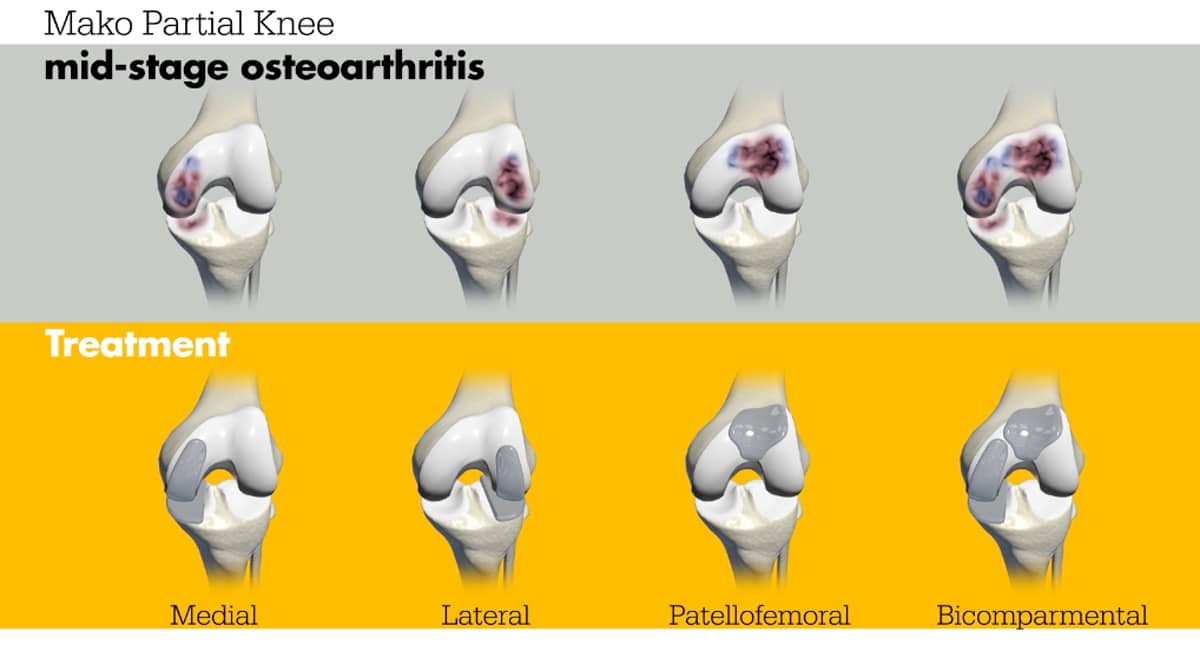
In a partial knee replacement, only the damaged compartment of the knee is resurfaced. This may be the inside or outside part of the knee, or the patellofemoral joint behind the kneecap.
The rest of the joint is left intact. Healthy cartilage, bone, and stabilizing ligaments are preserved so the knee can keep more of its natural structure and motion.
Because the entire knee is not replaced, the remaining healthy cartilage, bone, and stabilizing ligaments are left intact. That is one reason partial knee replacements can feel more natural than total knee replacements for the right patient.
Partial vs. Total Knee Replacement: Why Preserving Healthy Tissue Matters
Preserving healthy tissue is not just a philosophical preference. It can affect how the knee feels, how naturally it moves, how much tissue must heal, and what options remain available later in life.
When the knee’s geometry and stabilizing ligaments are preserved, the joint may feel more familiar to the patient after surgery. For active people, that difference can matter. The goal is not simply to reduce pain, but to create a knee that can support walking, training, travel, work, and return to sport when healing and strength allow.
How Robotic MAKOplasty Plans the Surgery Before It Begins
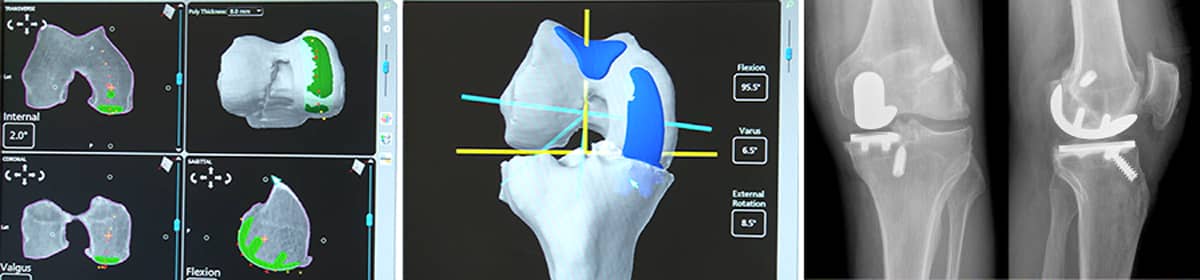
Robotic partial knee replacement begins with advanced imaging. A CT scan is used to create a 3D model of the patient’s knee. Before surgery begins, Dr. Stone can plan the implant position on that model and adjust placement for that patient’s anatomy.
During the outpatient procedure, the MAKO robotic-arm system helps guide the resurfacing of only the damaged area. The robot does not replace the surgeon’s judgment. It helps execute the plan with a level of precision that is not possible with manual guides alone.
That precision matters because small differences in implant position, joint balance, and soft-tissue handling can affect how the knee moves and feels after surgery.
A Partial Knee Replacement Can Preserve Future Options
One advantage of partial knee replacement is that it treats the damaged part of the knee while preserving healthy cartilage, bone, and stabilizing ligaments. That can help the knee feel more natural after surgery and may also leave more options available if arthritis progresses later in life.
In some cases, a partial knee replacement can later be expanded into a larger partial replacement or converted to a total knee replacement if needed. The goal is to choose the right amount of surgery for the knee you have now: repairing the damaged area while preserving as much healthy structure and future possibility as possible.
Returning to Sport After Robotic Partial Knee Replacement
For the right patient, robotic partial knee replacement can be a powerful option for returning to an active lifestyle. At The Stone Clinic, the goal is not to make patients less active after knee replacement. The goal is to help them recover strength, motion, and confidence so they can return to the activities they love.
Many patients begin walking soon after surgery and start physical therapy quickly. With focused rehabilitation, partial knee replacement patients often work toward what is sometimes called a “forgotten knee”: a knee that feels stable, natural, and dependable enough that patients are no longer thinking about it with every step.
Learn More About Partial and Robotic Knee Replacement
For a deeper look at partial knee replacement, robotic surgery, and how to decide whether a total knee replacement is truly necessary, explore:
- Robotic Partial Knee Replacement at The Stone Clinic
- What Is a Partial Knee Replacement?
- Is Total Knee Replacement Right for Me?
- Why Robots Matter in Surgery
Could Robotic Partial Knee Replacement Be Enough for Your Knee?
If you have been told you need a total knee replacement, find out whether robotic partial knee replacement can treat the damaged part of your knee while preserving what is still healthy and working.