Know the Bias of Your Surgeon
The bias of your surgeon (and of all physicians) influences the care you receive. Here are some of my own biases as they relate to different subjects. You will note that I see every injury as an opportunity to help the person optimize their program to become fitter, faster, and stronger.
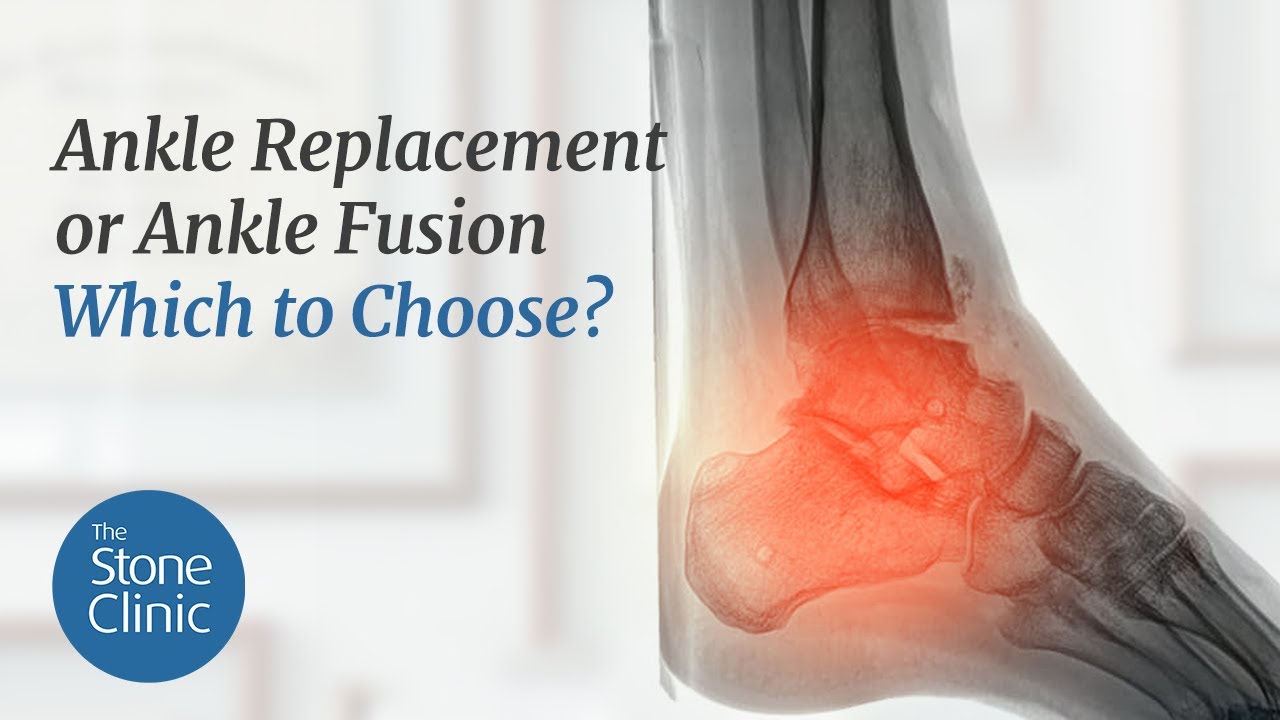
The Ankle
The ankle is a remarkable joint. Each year you take 2-3 million steps, loading this relatively small joint with up to five times your body weight. Yet the ankle never develops osteoarthritis unless there is an injury. There is something unique about its cartilage surfaces and its tight arc of motion that we have yet to fully comprehend.
Common injuries like ankle sprains are often treated with ice and compression and most often heal well — but not always. Multiple ankle sprains lead to instability of the ankle. Like a car tire that wears rapidly when out of alignment, an unstable ankle often develops post-traumatic arthritis.
My bias is that for each ankle injury, a careful exam is required. If a mild sprain is noted by a lack of excessive looseness when compared to the opposite ankle, then ice, elevation, and an ankle wrap with a gentle early exercise program is the best approach. Of course, we always use each injury, no matter the severity, to teach the athlete how to improve their fitness and performance, and with ankle injuries, their balance, to avoid another injury.
If there is significant looseness, pain, swelling, or bruising, an X-ray and an MRI reveal the specific tissues that have been damaged. Some just need ice, a brace, and early rehab, while others—such as associated fractures, articular damage, and multiple ligament injuries—may require surgical repair to obtain the optimum outcome. We want the data to make the decision with, not just a guess.
Ankle arthritis never occurs without trauma. With trauma, cartilage and ligaments are damaged. If they are repaired anatomically, the ankle has the possibility of returning to its normal status. My bias is to fix the fractures, repair the ligaments, and regenerate the cartilage as soon as possible.
Today, almost all injuries involving soft tissue, cartilage, and bone are being treated with anabolic injections of PRP, growth factors, and stem cell (progenitor cell) recruitment factors. Why? Because they accelerate healing, reduce swelling, stimulate lubrication, and provide a chemical environment that may reduce the development of arthritis. My bias is to treat all such injuries with these therapies whenever possible. We specifically add shock wave treatment to the injections, since there is reasonable data that the shock waves make injections work better by producing microinjuries that augment the healing response.
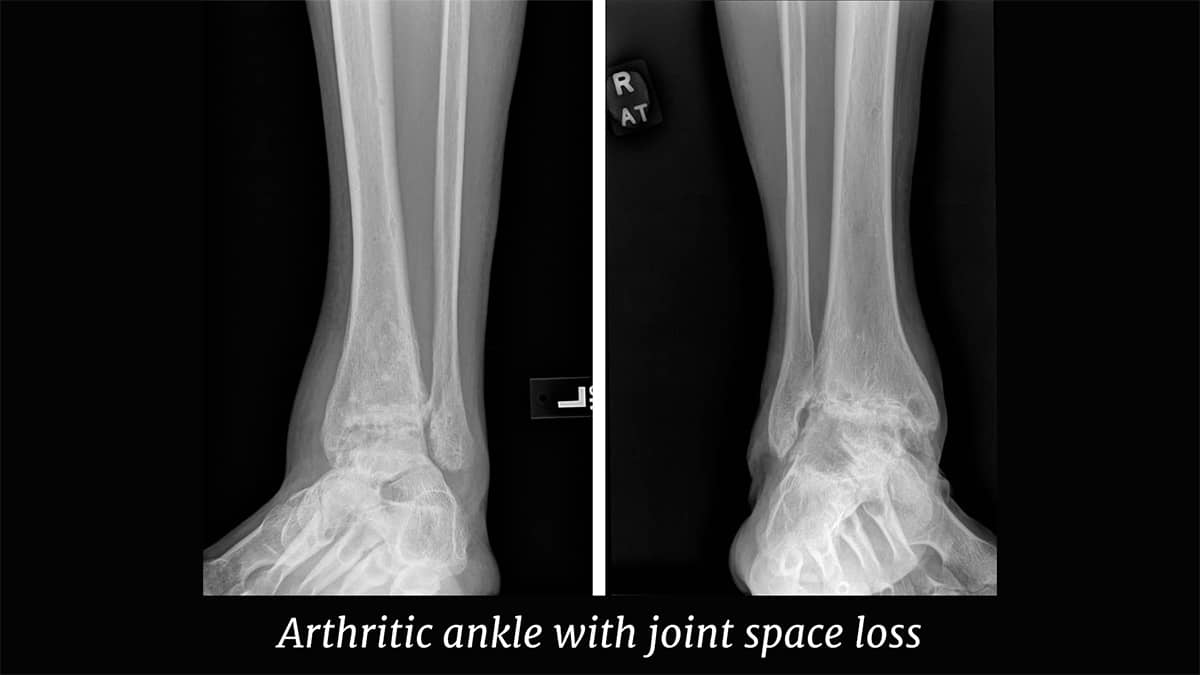
Severe ankle arthritis, where there is cartilage damage and often a bone-on-bone appearance on the X-ray, is now treatable using biologic therapies—whereas once there is bone-on-bone in the joints of the knee, hip, or shoulder, the options for tissue regeneration are limited.
The ankle is unique in this feature, where we can open a bone-on-bone closed joint and graft the damaged cartilage. Stone Research Foundation published results on this treatment in October of 2026. My bias is to help the patients—specifically, those who have been told that their only option is an ankle fusion or an ankle replacement—by offering an articular cartilage paste grafting tissue regeneration approach, augmented by lubrication and growth factor injections. But this is not yet standard care, and it will not work in everyone. Only continued publication of results of this approach will lead to widespread adoption.
The Achilles tendon is often included in discussions about ankle injuries. We have created a modified percutaneous technique of Achilles tendon repair and have performed these for more than three decades. Very rarely must we open an Achilles tendon to repair it. My bias is to treat the tendinosis with injections and the tendon tears with our percutaneous repair, augmented by injections. Return to full sports is much faster when the open incisions are avoided.
In sum, we want to use the unique biology of the ankle joint to advance the science of treating ankle injuries. What you are offered will depend on the bias of your surgeon, because their thinking may or may not fit with yours.
For a closer look at the science behind ankle-preserving care, we invite you to explore Stone Research Foundation’s newly published research on ArtCart for ankle cartilage regeneration.
How to Avoid Ankle Fusion with ArtCart
When experiencing ankle arthritis, patients are often told they either need an ankle replacement or ankle fusion procedure. At The Stone Clinic, we've developed an alternative approach using a technique developed by Dr. Stone: Articular Cartilage Paste Graft (ArtCart). This procedure is a key component of our BioAnkle program.
BioAnkle biologically rebuilds the ankle joint, allowing patients to maintain their natural mechanics within their ankle and return to the activities they love without the significant drawbacks associated with fusion or replacement procedures.