Four Ways To Treat a Ruptured Achilles Tendon
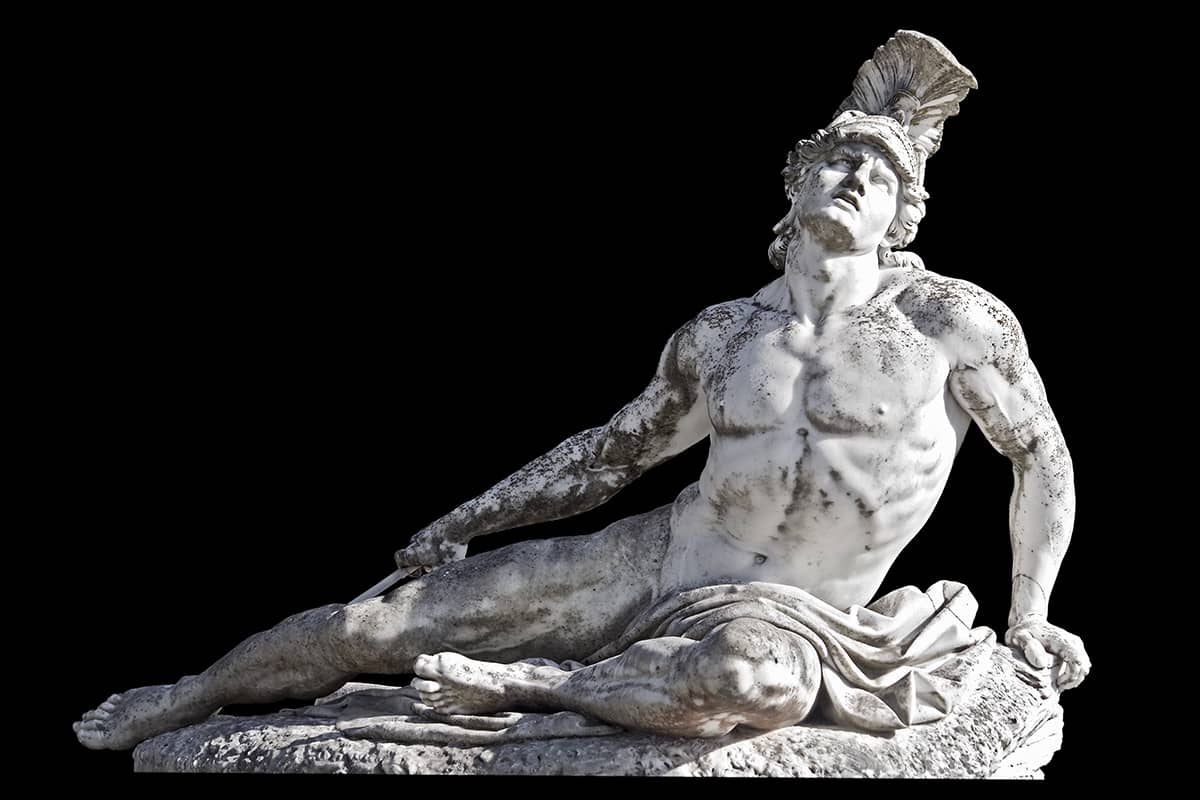
Achilles was held by the heel when his mother dipped him into the River Styx, protecting him from harm. But the undipped heel tendon itself has plagued athletes for ages. Here are the four ways to restore the function of a ruptured Achilles tendon.
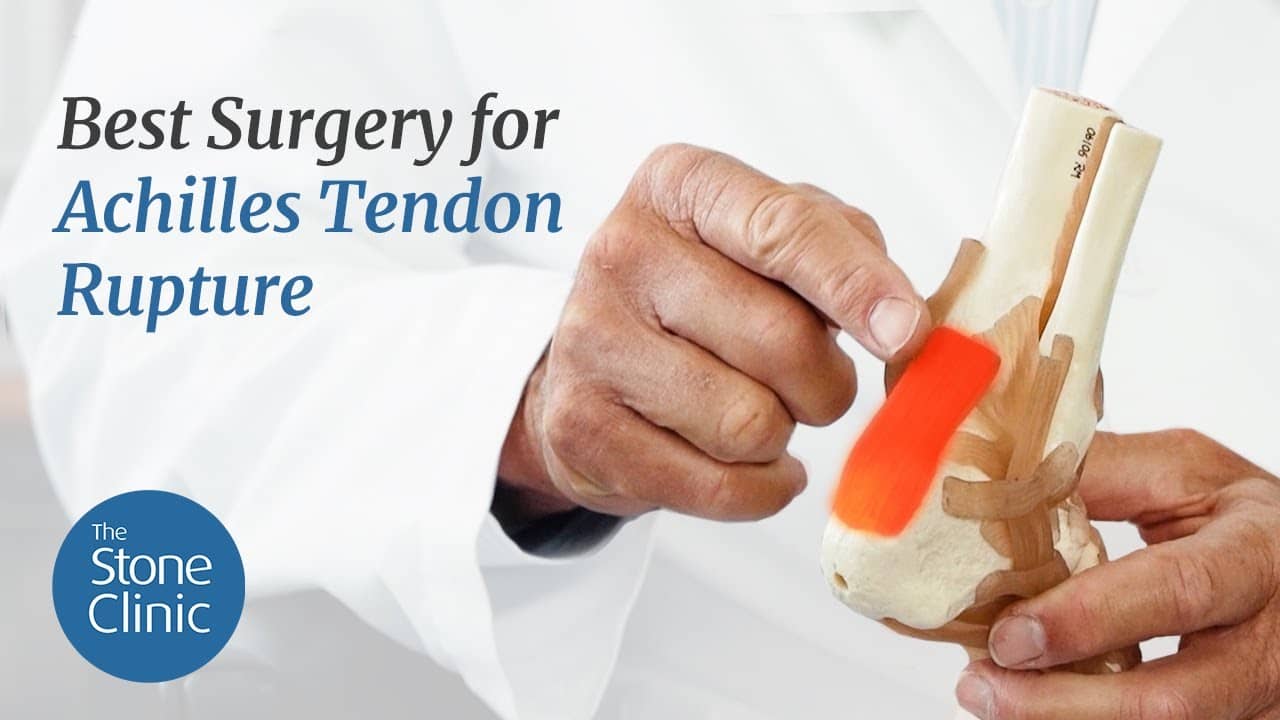
- Almost all Achilles tendon ruptures heal on their own, untreated. The tendon lives within a sheath and is perfused with vessels. Once torn, a natural blood clot forms around the ends of the torn collagen fibers. Slowly, the body forms a scar ball, then remodels it over the course of twelve months into a tendon. Unfortunately, as the torn ends have pulled apart, the healed tendon is longer than the original. This increased length reduces the lever arm on the foot, thereby leading to a weaker push-off. It is for this reason that most athletes choose a surgical repair: to restore the normal length and power. But without surgery, the tendon can heal all by itself.
- Open surgical repair. This used to be the standard of care. The surgeon incised the sheath, exposed the ends, and sewed them together with strong sutures. It usually worked, but too often led to multiple complications. First, once the sheath was opened, the natural blood clot was lost and, with it, the body’s own growth factors and stem cells. Second, the sheath was difficult to close over the swollen ends of the tendon. Scar tissue thus formed, limiting motion and requiring months of physical therapy. Third, infection was not uncommon.
- Modified open surgery, or mini-incision surgery, came about as an effort to address the problems of open surgery (and as a means for orthopedic implant companies to sell a device). This procedure involves making a smaller incision over the ruptured ends, opening the sheath, losing the blood clot, and inserting a clip that permits the ends of the tendon to be pulled together —often anchoring it (with more devices) to the calcaneus (heel bone). Modified open surgery gained popularity as several top basketball players underwent the procedure, and the companies advertised it as the new best approach. Unfortunately, permanent devices and non-resorbable sutures, when added to the loss of the blood clot and the scarring of the sheath, increase the risk of infection.
- Percutaneous Achilles repair was first described by Griffith and Ma in 1977. I modified the procedure in 1991 to use all absorbable sutures and an improved weave, then later an accelerated rehabilitation program. The advantages are that there is no open incision over the ends of the ruptured tendon, and no loss of the natural clot. The sheath remains intact. The length of the normal Achilles can be restored. No artificial materials are necessary. With follow-up by sequential MRI examinations of the repaired tendon, we learned that the tendons hypertrophy over time, thickening as the year goes by. Based on that, early return to sports was permitted. To date, no infections or rupture of a percutaneous repair tendon have been reported after using this technique.
Today, all tears and repairs are augmented by injections of PRP, growth factors, and other cellular therapies. This hopefully speeds the healing process by further recruiting the body’s own stem cells and by reducing inflammation and scarring.
Since this tendon will heal naturally on its own, the real goal of surgical repair is to restore the normal length and return the athlete to sports with full power as soon as possible. Percutaneous repair achieves that goal, and would make Achilles’ Mom proud…or so we imagine.
Our Percutaneous Approach to Achilles Repair
At The Stone Clinic, we repair Achilles tendon ruptures without open surgery using the Percutaneous Achilles Repair technique. Over the past 30 years, Kevin R. Stone, MD, has refined this approach to eliminate the need for a large incision, preserve growth factors that accelerate healing, and reduce infection risk. Here’s how.