What will we change as a result?
Pro athletes at the pinnacle of their careers are not like other human beings. Their drive, skill, and relationship to pain are off the charts, which leads to unbelievable performances—or failures. Let's look at a few of the highlights and lowlights of the Vonn story.
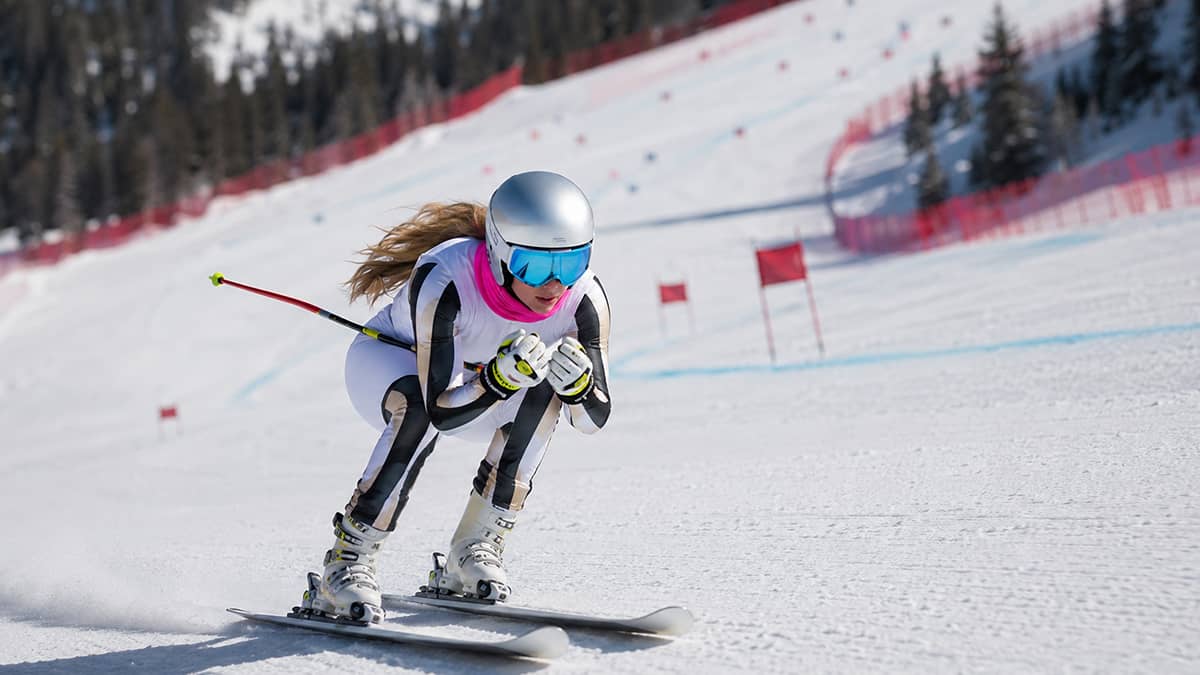
Since snow conditions are constantly changing, and the goal is to go faster than any other human being, skiing at speed means taking more risks—which usually leads to injuries. So those risks must be calibrated to be worth it. A tighter line down a racecourse that leads to missing or hooking a gate is an unsuccessful risk. And a tactic that leads to an injury is too often a season-ending decision in skiing.
Injuries are common to the knee joint, which is the weak link between the ankle and the femur. The ankle itself is essentially in a cast, fixed to a ski by a binding set so strong that it won't release except with forces that rupture ligaments or break bones. Torn ACLs and meniscus cartilage tears occur with a 300% chance in a skier who progresses from a junior level to the World Cup, meaning they are likely to suffer three potentially career-ending injuries during that journey.
These injuries often lead to arthritis, or the wearing away of the surface of the knee. If treated early, the surfaces can be repaired by techniques such as articular paste grafting and meniscus replacement. However, they take at least six months to heal, so most high-level athletes choose to defer these procedures until the end of their career. In Lindsey's case, that meant she developed severe enough arthritis to prematurely end her career in 2019 at age 34. Living in pain, she chose a partial knee replacement, a procedure we do routinely with robotic guidance. Our patients, like Lindsey, usually return to full sports after three to four months. So, one lesson here is to try to biologically repair injured tissue before it becomes so arthritic that only an artificial solution is available. The next lesson is, don't live with pain. Even bionic (artificial) solutions, if done precisely with the latest techniques and technology, can return you to a high level of sports.
Finally, not all ACL injuries are alike. Some are full ruptures that lead to gross instability of the knee. Other full ACL ruptures don't. There are ACL-dependent knees that need their ACL, and other knees, ACL-independent, that don't (though most people need the critical ligament to have a stable knee). There are also partial tears with variable amounts of laxity. Most athletes with ACL injuries get them repaired or replaced because of (a) the instability and (b) how the ACL protects the knee from other related injuries, such as meniscus tears. However, many top skiers try to wait, test their knee, and see if they can defer until their season—or their career—is over. The cost of waiting (more damage to the knee) is high, but the reality of a skiing career is that it is short.
What we witnessed with Lindsey Vonn is that even with injuries you can ski at an extremely high level if you can ignore the pain, strengthen the muscles, train like a mad woman on balance, proprioception, flexibility, and power. Eventually, though, the knee is going to fail, sometimes at just the wrong moment.
The final lesson may be the toughest to learn: Judgment, tactics, and timing are as important as maniacal drive. While we all were in awe of Lindsey's toughness and will to continue in the face of adversity, we wonder if her decision to ski the unnecessary last race a week before the Olympics, and to cut the corner in the Olympic downhill—which led to catching a pole on the gate—was due to hubris.
Once her invincibility cloak was lowered, Lindsey's very human vulnerability was exposed to the consequences of errors in a dangerous sport. The athlete and all her fans were humbled. Yet which of us would have had the presence to pause, hold back a little, and make the perfect decisions? Can we learn from this and make those decisions next time, or is the glitter of gold just too blinding?
For more on how skiers can play for a lifetime and avoid knee pain after skiing, be sure to check out all of Dr. Stone's blogs on skiing injury prevention and recovery.