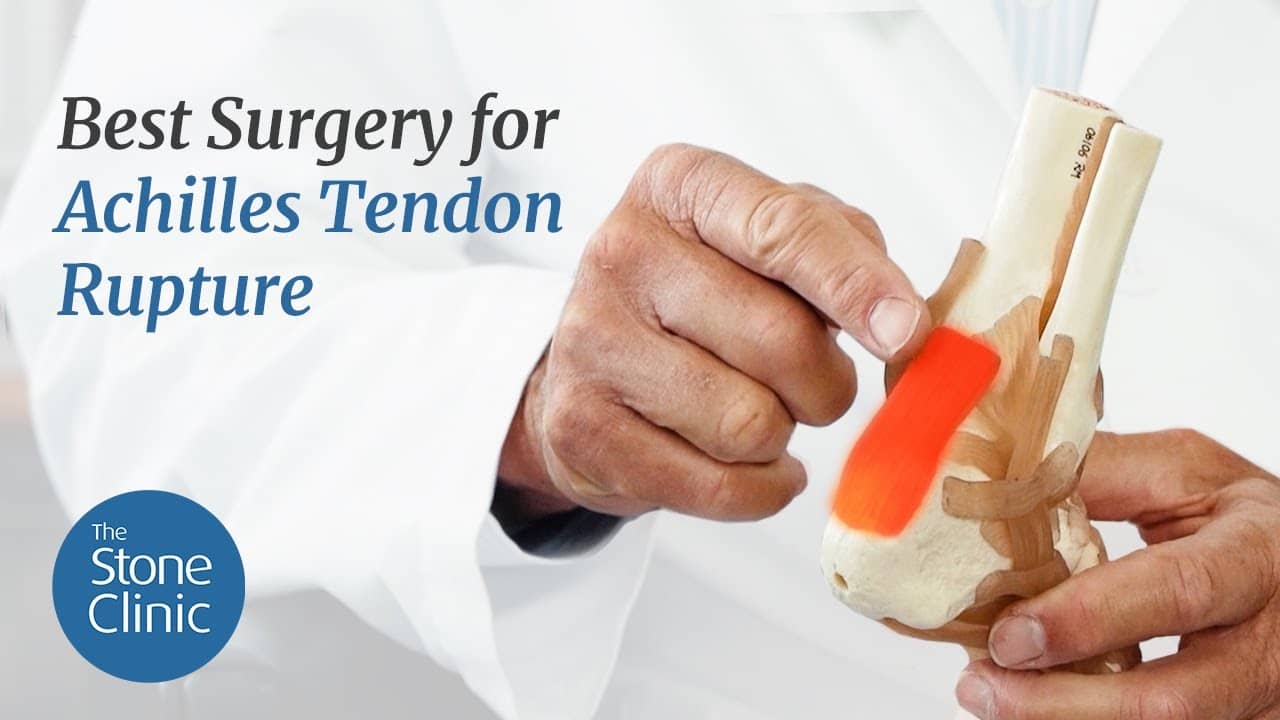
Know the Bias of Your Surgeon - Achilles Tendon Tears
The Achilles tendon is getting a lot of press these days. Pickleball is now our number one referral source. Ouch. How it is treated matters.
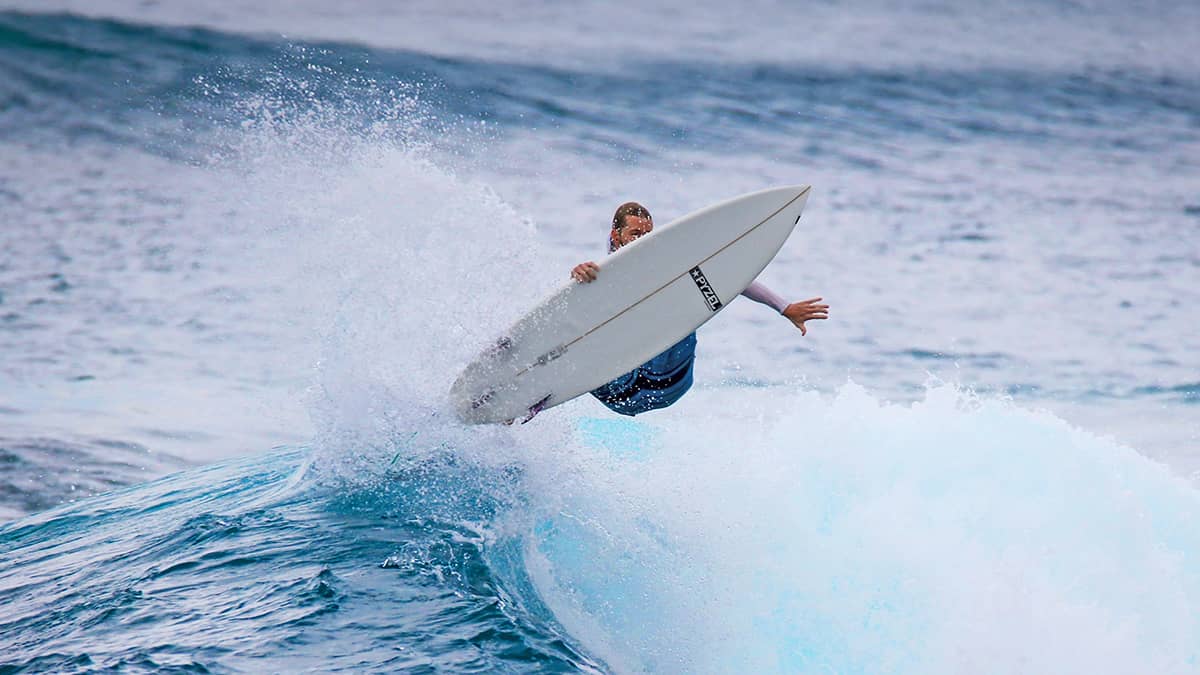
Pictured: Achilles rupture patient Harper C surfing within 6 months of his Percutaneous Achilles Repair. He went on to surf 100+ days in the year after his procedure.
The Achilles tendon is susceptible to ballistic motions such as landing from a jump (basketball players) or pushing off suddenly (Pickleball and tennis). It can happen in all age groups but is most common in 40–70-year-olds unless they are NBA players whose incredibly long legs and forceful landings place all tissues at risk.
The common statement is that “I heard a shot go off then suddenly had pain in my calf.”
The reality is that all of these ruptures of the tendon will heal on their own. Surgery is not required. However, when they heal without treatment, the gap between the tendons fills with scar and leads to a slightly longer tendon, resulting in a weaker calf. For most athletes, that outcome is not acceptable.
Surgical repair depends on the bias of your surgeon. Most still make open incisions as they were taught in their residency training despite multiple publications showing that an open incision is often inferior to a percutaneous repair due to the loss of the natural blood clot that forms around the torn ends of the tendon.
Even so-called “mini” open procedures suffer from the same loss of clot, increase scar tissue due to opening of the tendon sheath, and often involve implantation of “devices” sold by the implant companies with the idea that the repairs work better. None of this is helpful in my personal opinion and review of the literature.
The true percutaneous procedure in which needles are passed through skin punctures was published by Griffith and Ma in 1977, showing excellent outcomes. The technique works by cinching together the separated ends of the tendon within the natural sheath and with preservation of the healing blood clot. We modified this procedure in the early 1990s using all resorbable sutures and an accelerated rehabilitation program permitting early motion and more rapid return to sports. We brought back our repairs for sequential MRIs to understand the healing process of the ligaments. Our thirty-year experience has confirmed to us that the Achilles will heal on its own, but works better if the ends are brought together. No more than three sutures that dissolve and a defined early exercise program are needed.
But that is just my bias.
Our Percutaneous Approach to Achilles Repair
At The Stone Clinic, we repair Achilles tendon ruptures without open surgery using the Percutaneous Achilles Repair technique. Over the past 30 years, Kevin R. Stone, MD, has refined this minimally invasive approach to eliminate the need for a large incision, preserve factors that accelerate healing, and reduce infection risk. Here’s how.