Meniscus Replacement Update
The sad news is, there isn’t any. Despite overwhelming evidence that loss of any portion of this key shock absorber in the knee leads to abnormal biomechanics, force overload, and eventual arthritis, very few meniscus transplants are being done worldwide. Here is a brief update.

This image is a slide from a 1986 lecture by Dr. Stone on the importance of meniscus preservation.
Positioned between the femur and the tibia in the knee joint, the medial and lateral meniscus cartilages distribute the forces of walking and running. This keeps the load from these activities from concentrating in a narrow area on the top of the tibia. The meniscus also provides stability to the knee as well as unique stem cells, nerves, and blood vessels that communicate with the surrounding tissue and the brain, contributing to our proprioception (i.e., instinctive knowledge) of where the joint is in space.
Constructed with circumferential and radial collagen fibers and connected to the tibia and femur with specialized ligaments, the meniscus acts as a barrier that keeps joint fluid within the knee. It is intolerant of even small tears—for if it is torn, the joint fluid can track out the back of the knee, forming a “balloon” called a Baker’s cyst. Eighty-five percent of these cysts are associated with tears in the meniscus. Even small areas of meniscus tissue loss, such as a tear in the posterior horn or root of the meniscus, lead to giant increases in force concentration. A 20% loss has been measured as a 160% increase in concentrated loads on the top of the tibia.
Efforts to repair the meniscus blossomed in the 1990s and continue today. Where once only a very few were sewn back together, the number has increased to 10% in certain populations of young athletes; but older people are frequently denied the repair, in part due to several factors: misunderstanding the healing potential, their providers’ surgical skills, and insurance influences.
With over 1.4 million knee joint meniscus injuries brought to surgery in the U.S. each year, and the severity of the consequences of loss of the tissue, one would expect that meniscus repair or replacement would be a common orthopaedic procedure. While more repairs are being attempted, only a few thousand meniscus replacements (using human donor tissue) are performed annually worldwide — a number that has not changed substantially in years. And there are no effective artificial tissue meniscus replacements. The reason for this is that people take 2-3 million steps per year, at up to five times their body weight. The biological meniscus slides against both smooth, healthy articular cartilage and rough arthritic surfaces. No artificial material is both soft enough and durable enough to withstand that combination of environments without either damaging the articular cartilage or spitting off wear particles when rubbing against the arthritic areas. Only living tissue, which is capable of remodeling, works.
Our own experience with human meniscus allografts has been rewarding, but not perfect. Most meniscus allograft transplants accomplish the job of stabilizing the knee, relieving pain, and protecting the joint. We have performed over 500 of these in athletes of all ages and in people over 50 years of age who wish to delay artificial joint replacement. Still, some meniscus transplants will retear or squeeze out to the side of the joint, diminishing their efficacy. The procedure is tricky to do well, takes time and a skilled team, and, unfortunately, is not reimbursed by some insurance companies. On top of that, the tissue banks that harvest the tissue charge liberally for their efforts.
All of this combines to doom knees that should and could be protected. The moment a meniscus is torn is the moment it could be repaired or (if sufficiently damaged) replaced. Letting so many people develop unnecessary arthritis or live with knee pain is both unfortunate and avoidable.
My SAVE THE MENISCUS slide, from a lecture I gave in 1986 as I was trying to find a solution, rings equally true today.
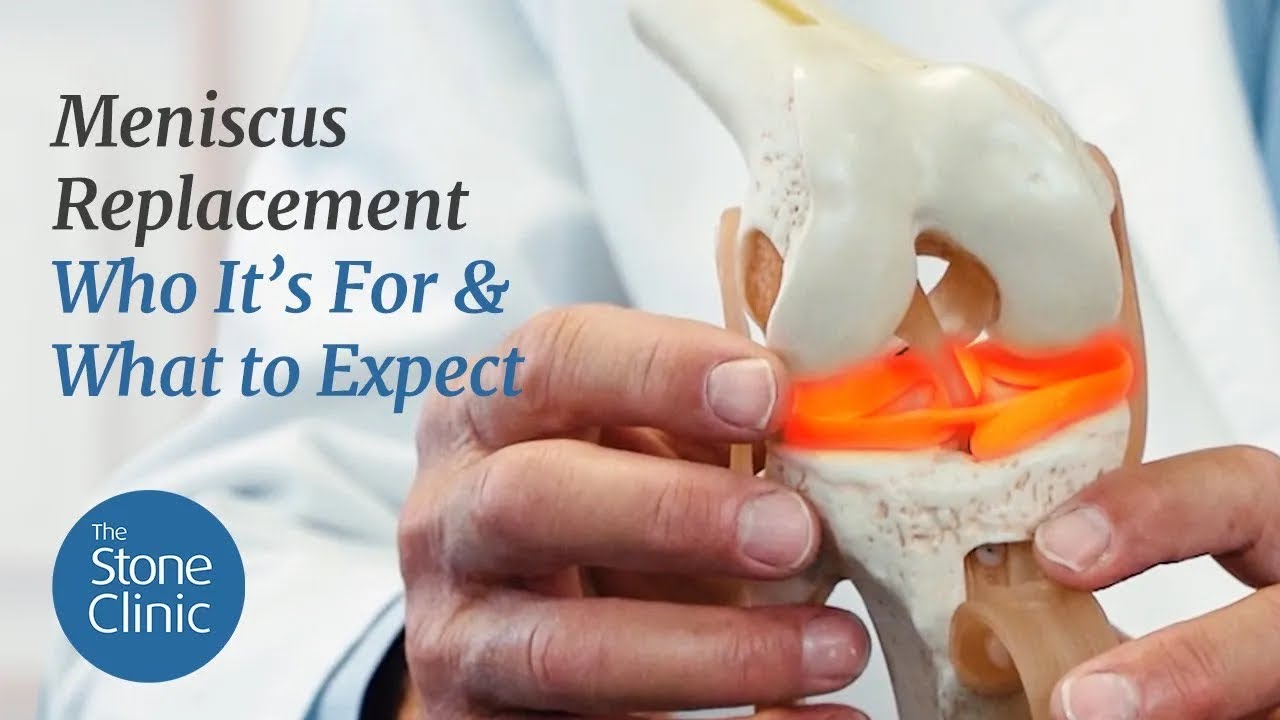
Meniscus Transplant - Who's It For & What To Expect
The meniscus is the knee's shock absorber. When part or all of it is torn, removed, or no longer functioning, more force passes directly through the joint. Over time, that can lead to pain, cartilage wear, and arthritis.
Meniscus transplant surgery replaces missing meniscus tissue with donor cartilage. The goal is to restore cushioning, reduce pain, protect the joint surface, and help the knee move more naturally again.