The Cartilage Regeneration Revolution: Ending Arthritis?
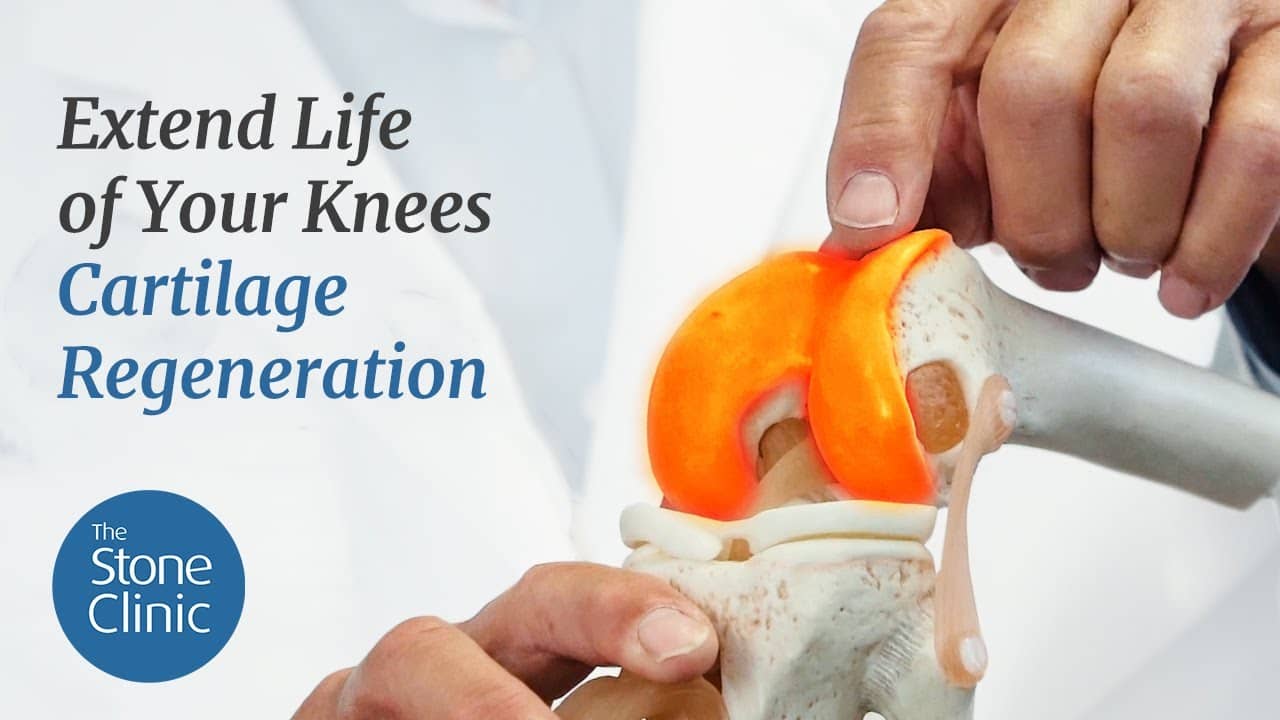
The bearing surface of all joints is called articular cartilage. Once injured it rarely heals. But it can be repaired and regenerated.

Post-traumatic arthritis is usually caused by one of the following: an injury such as an impact, a broken bone with poor healing, or a meniscus or ligament tear. All can lead to abnormal forces in the joint and wearing away of the articular cartilage surface, exposing the underlying bone. Untreated, the bone becomes deformed and the surrounding synovial membrane of the joints inflamed. Arthritis can either set in quickly—sometimes within months of an injury—or slowly, over decades after the initial injury. The joint becomes stiff, painful, and sometimes swollen. Drugs such as non-steroidal anti-inflammatories (NSAIDs) can relieve pain, but no non-surgical treatment has changed the course of the disease.
Inflammatory arthritis, such as rheumatoid, psoriatic, and infectious, has a different group of causes and presentations. Osteoarthritis may be genetic or may have an underlying, yet-to-be-determined infectious cause. “My parents and grandparents had arthritis, and now I do too,” my patients often say. But is the cause genetic, or is it because you grew up in the same microbiome as they did? We don’t yet know.
I mostly see post-traumatic arthritis: damage from trauma or sports injury. Surgical interventions, such as our preferred articular cartilage paste graft, have demonstrated that cartilage can be regrown inside the knee and other joints. This requires that marrow cell stimulation is added to a mixture of articular cartilage and bone in a paste combination, and impacted into damaged areas of the knee, ankle, or toe joints. Additives of growth factors, hydrogels, and stem cells have recently been shown to augment healing, and some are available to both human and veterinary patients.
The goal, however, has been to have an injection that stimulates the regeneration of the articular cartilage and somehow reverses the course of the disease.
Until recently, that was only a dream. But now, a 2025 study released by Helen Blau at Stanford focused on inhibiting a specific enzyme named 15-PGDH (15-hydroxyprostaglandin dehydrogenase), which breaks down prostaglandin E2, a key component of tissue health.1 This enzyme not only increases with aging but may also be the cause of tissue degeneration. When 15-PGDH was inhibited with an injection, mice regrew normal-looking articular cartilage. Unfortunately, humans are much bigger than mice, and the injections will still need a combination of surgical repair, matrices such as articular cartilage paste grafts to support the tissue regeneration, and biomechanical support such as meniscus replacements to actually cure arthritis.
However, an entire field of inhibiting aging-related enzymes may slow down the aging process in muscles, bone, nerves, and cartilage and open promising pathways for cures.
Since arthritis is a multisystem disease, this new approach to regenerating articular cartilage by inhibiting the enzymes that break us down over time may mean more than tapping the fountain of youth — It may even stall the onset of degeneration and death.
References
- Singla M et al. Inhibition of 15-hydroxy prostaglandin dehydrogenase promotes cartilage regeneration. Science. 2025;eadx6649. doi:10.1126/science.adx6649
Our Approach to Cartilage Regeneration
While an exciting breakthrough for arthritis treatment in mice, this science has a long, uncertain path before treating human injuries. The good news is that the cartilage regeneration revolution is already underway in humans, thanks to the procedure pioneered by Dr. Stone: the Articular Cartilage Paste Graft (or ArtCart).
ArtCart is a minimally invasive, one-step procedure that regenerates articular cartilage. Long-term clinical studies demonstrate that the procedure restores function and provides an average of 17 years of pain relief for knee patients (13 years longer than the most commonly performed procedure, microfracture). The Stone Research Foundation (SRF) is conducting research to develop the next generation of this technique, ArtCart+, with the goal of achieving even better outcomes and expanding the technology for veterinary use.