Degenerative Meniscus Tears
The torn degenerative meniscus is a common finding in people over 50 years of age. A recent study in 133 patients demonstrated that surgical resection of this degenerative tear showed no better result than leaving them alone. Insurance companies cheered. Patients, however, suffered. The data actually showed that 81% of the patients in the meniscectomy group and 70% in the control group went on to develop degenerative arthritis independent of the treatment. Said another way, both approaches are awful for the patient.
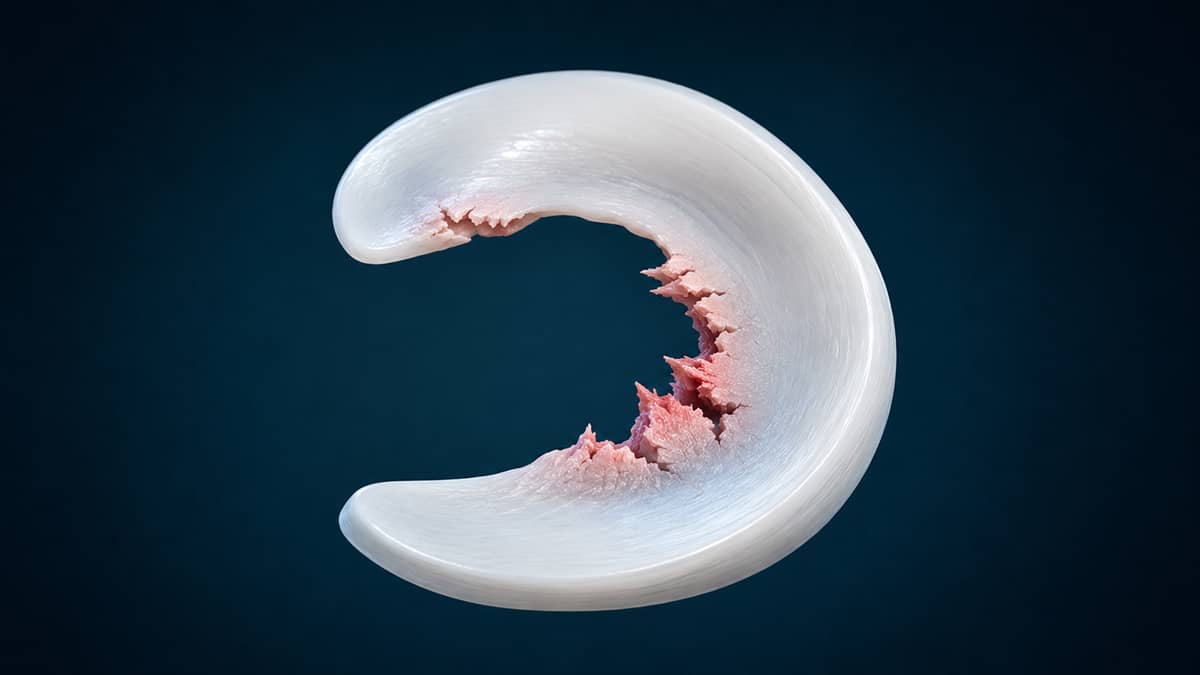
The signal left out of the noise was the fact that there are other options in this 21st century for treating painful knees with torn meniscus cartilages—and these were not compared in the study. Nor are these more novel treatments offered to many patients.
As a patient, you need to know the knowledge, bias, outside influences, and skill of the surgeon treating you. How meniscus tears are addressed is an excellent example of the wide range of offerings provided to patients who must weigh these factors. Here is a little insight.
First, you should know my bias. I am biased to saving meniscus tissue by repair or replacement. Our data shows there are powerful injections available today that shut down inflammation and stimulate repair. Therefore, many patients, particularly with degenerative tears, can have symptom relief and possibly joint arthritis protection with and without surgery. I also believe that if a significant amount of the meniscus is either missing or removed by the surgeon, a meniscus replacement should be performed as early as possible. Our published data shows that, with allograft (donor) meniscus replacements, partial and total joint replacement can be delayed or even avoided.
With that as an introduction, here is our approach to painful degenerative tears usually found in active patients over 50 years of age.
Step one is a careful physical exam looking at range of motion of the hip, knee, and ankle joints combined with a gait analysis. The reason is that if the range of motion is limited, or the joint severely angled, “bad biomechanics will destroy good biology any day of the week.” People in pain walk with abnormal gaits, develop weak muscles, and overload parts of their joints. Any interventions on my part will have a higher success rate if our physical therapy and fitness team can work with the patient to rebuild muscle, optimize their joint motions and, of course, optimize their weight. People take 2-3 million steps per year, landing on a single leg with up to five times their body weight. A ten-pound weight reduction makes a huge difference in their joint loading.
Swelling of the joint, when noted on a physical exam or an MRI, is deadly for the healing of cartilage. The excess joint fluid has degradative enzymes that inhibit healing and break down the collagen structures.
Removing the swollen fluid and replacing it with a natural lubricant such as hyaluronic acid—augmented by growth factors from the patient’s blood, bone, or fat—creates an anabolic environment to promote healing and reduce pain.
Taking these first steps in addressing the degenerative torn meniscus often keeps people out of surgery. However, if there are mechanical symptoms on exam, or catching or locking when walking or playing sports, the effects of the injection therapies are reduced. Since the normal joint has a coefficient of friction five times as slick as ice on ice, adding an unstable torn piece of meniscus increases the friction, accelerating the formation of arthritis.
The outcomes of repairing the torn meniscus depend in part on the skill of the surgeon. Most commonly, only a portion of the torn meniscus is degenerative, with healthy tissue surrounding the tear. Trimming away only the smallest catching tissue and surgically repairing the more extensive, often cleavage-like tears seen on the MRI, is not only possible but even more successful with the addition of growth factors and cells obtained from the bone marrow or fat at the time of surgery.
When an entire section of the meniscus is lost due to irreparable tearing, degeneration, or previous surgery, a meniscus allograft replacement has been highly effective at reducing pain, returning the patient to sports, delaying arthritis, and significantly delaying the need for partial or total artificial joint replacement. In our peer-reviewed 2- to 25-year outcome study, we found that patients over 50 years of age who were (a) referred for a partial or total knee replacement and (b) still had some joint space remaining, a meniscus allograft bought 42 of 85 of these patients an average of 8.5 years before they came to a joint replacement procedure. Forty-eight of the 85 never underwent another knee surgery2.
Again, you need to know the bias of your surgeon. I developed the collagen scaffold for regenerating segments of the meniscus in the 1980s and the three-tunnel technique for meniscus allograft replacement in the 1990s, so I have a low threshold for replacing someone’s damaged meniscus if I can’t get them better with injections or creative repairs. But I also have low tolerance for insurance company “guidelines” that cause people to destroy their joints because “arthroscopy” or resection of the meniscus doesn’t do better than physical therapy alone at preventing arthritis. Of course it doesn't. People need this key structure. Evolution put it there for good reason. Our job is to keep it by repairing, regrowing, or replacing it and pushing forward the science of tissue regeneration. And the sooner, the better.
References
- Kalske R, Sihvonen R, Paavola M, et al. Arthroscopic Partial Meniscectomy for Degenerative Tear—10-Year Outcomes. New England Journal of Medicine. 2026;394(17):1757–1759. doi:10.1056/NEJMc2516079
- Stone KR, Walgenbach AW, Slatter S, et al. Meniscus Allograft Transplantation in Conjunction With Arthroscopic Biologic Knee Restoration Delays Arthroplasty in Patients Older Than 50 Years. Arthroscopy. 2025;41(4):1019–1026. doi:10.1016/j.arthro.2024.06.008
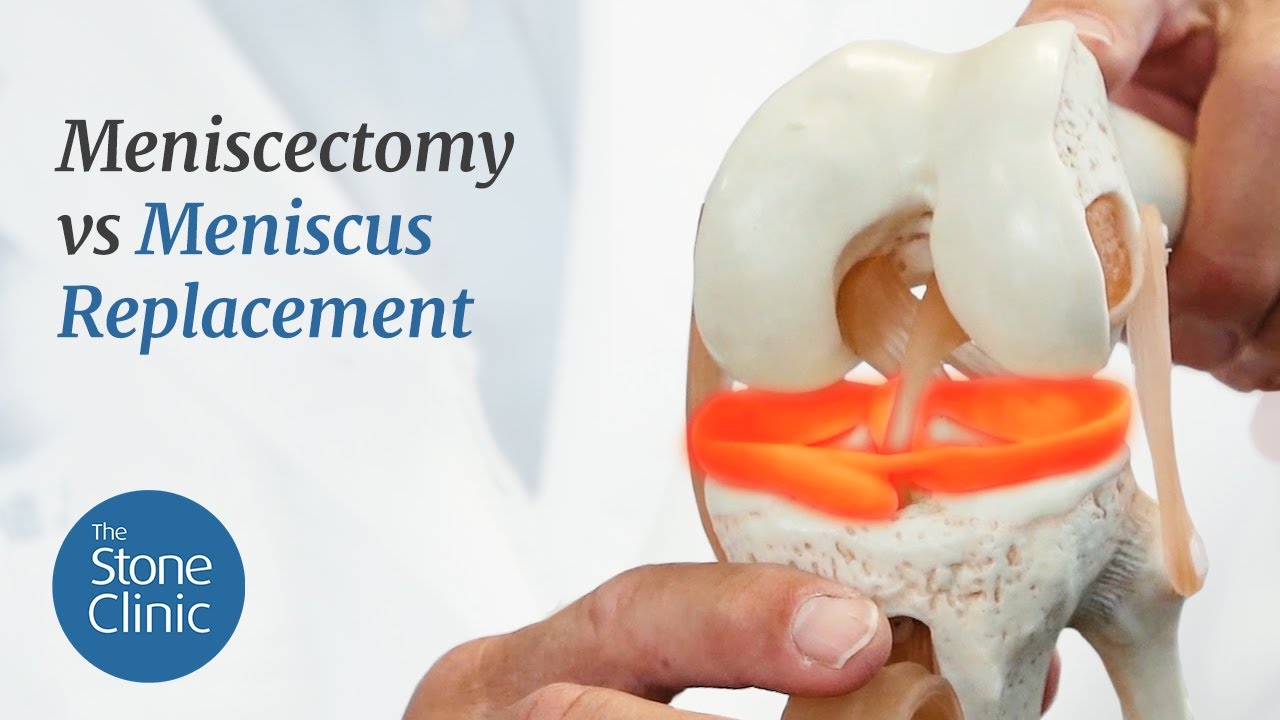
Meniscectomy vs Meniscus Replacement
Meniscectomy can reduce symptoms when torn tissue is catching or causing pain, but removing meniscus tissue also removes protection. At The Stone Clinic, our bias is clear: repair the meniscus whenever possible and replace it when it is irreparably damaged or missing. The earlier the knee's shock absorber is restored, the better the chance of protecting your joints for a lifetime.