Shoulder Bursitis/Impingement: Symptoms, Treatment, & Recovery Time
Shoulder bursitis occurs when the bursa in the shoulder becomes inflamed. The shoulder bursa is a small, fluid-filled sac located between the bones, tendons, and muscles of the shoulder joint. Its primary function is to reduce friction and provide a smooth gliding surface for these structures during movement. When the bursa becomes irritated or inflamed, it can cause pain, stiffness, and limited range of motion. This condition is common in both young athletes and middle-aged individuals, especially those who engage in repetitive overhead motions or heavy lifting.
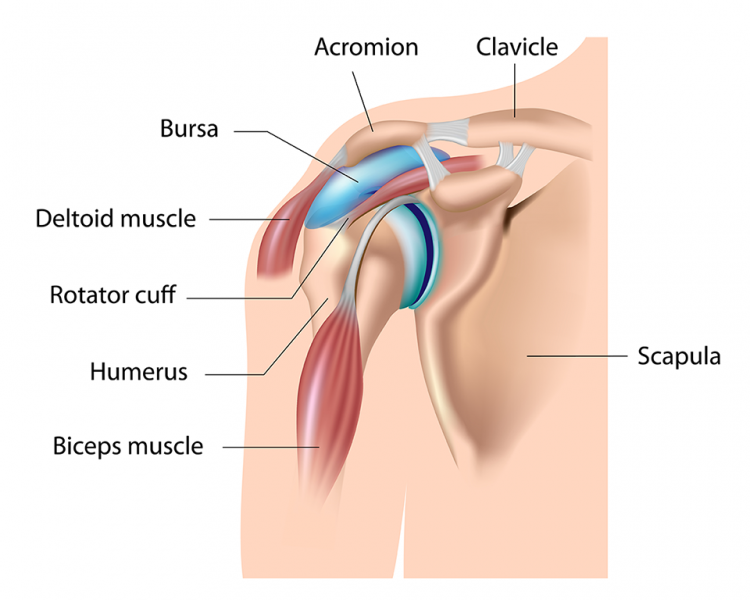
Shoulder Bursitis Symptoms & Causes
Bursitis in the shoulder often results from repetitive overhead activities, lifting, or an initial injury that triggers inflammation. Over time, the inflamed bursa and nearby tendons thicken, reducing the space within the shoulder joint. This causes further pinching and irritation—a condition known as shoulder impingement.
Common causes of shoulder bursitis include:
- Repetitive motion or heavy lifting
- Sports involving overhead movements (e.g., tennis, swimming)
- Injuries or trauma to the shoulder
- Underlying conditions such as arthritis or tendonitis
Diagnosing Shoulder Bursitis
Accurate diagnosis is key to effective shoulder bursitis treatment. During a physical examination, we look for tenderness, swelling, or restricted movement. Diagnostic tools like X-rays can reveal bone abnormalities or calcifications in the bursa. For more detailed imaging, an MRI might be recommended to rule out conditions like a rotator cuff tear.
Non-Surgical Treatments for Shoulder Bursitis
Most cases of shoulder bursitis can be managed with non-surgical treatments. Recovery typically takes several weeks to months, depending on the severity. Working with an experienced physical therapist is crucial for restoring shoulder function. Physical therapy will utilize specific stretching exercises to improve your range of motion, relieve pain, and strengthen the muscles around your injury.
Surgical Treatment: Bursectomy
For severe or chronic cases, surgery may be necessary. A bursectomy, the surgical removal of the inflamed bursa, relieves persistent symptoms and restores normal shoulder function.
Take the First Step Toward Becoming Fitter, Faster, Stronger
Don’t let shoulder pain limit your activities. Early diagnosis and treatment are key to managing shoulder bursitis effectively. Our team of highly trained therapists can alleviate the pain with personalized 1:1 physical therapy sessions with the goal of returning you to sports fitter, faster, stronger than you've been in years. Contact us at (415) 563-3110 for an appointment.